
Egypt’s White Desert
/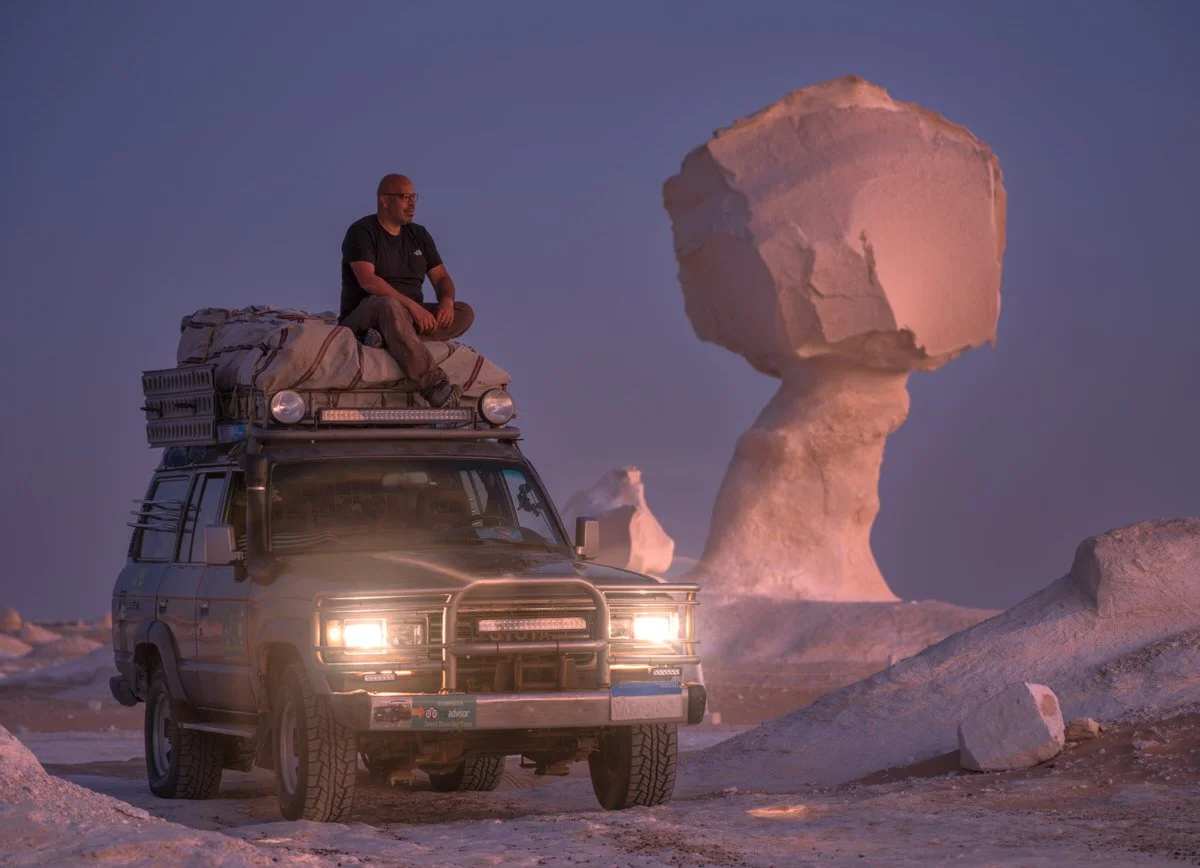
Twilight in the White Desert
The White Desert, Egypt: Where the Sahara Looks Like Another Planet
I've visited Egypt's White Desert several times. Whenever I have a short break and need to unwind, without driving myself or taking on an extreme adventure, I simply fly to Egypt and spend time there. For me, it's a form of photographic meditation, a place to slow down, reconnect and quiet the soul.
Imagine towering chalk sculptures glowing pink at sunrise, surrounded by nothing but silence and sand. This is Egypt's White Desert, known in Arabic as Sahara el-Beida.
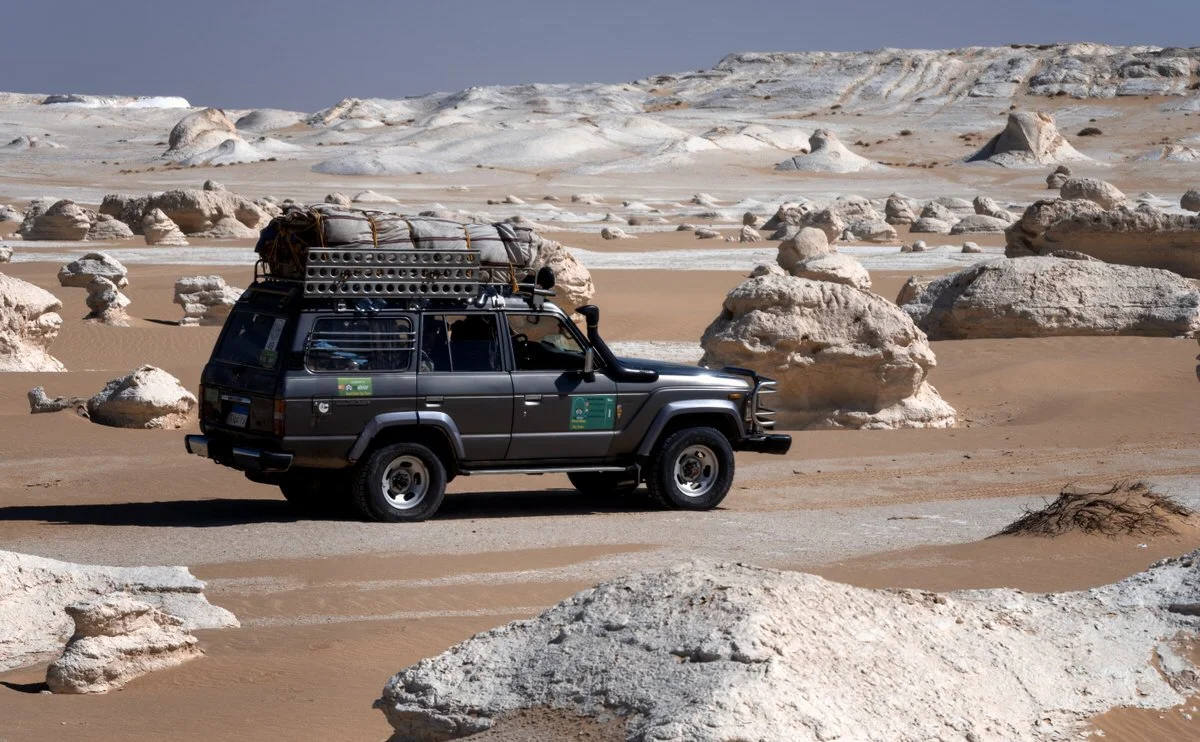
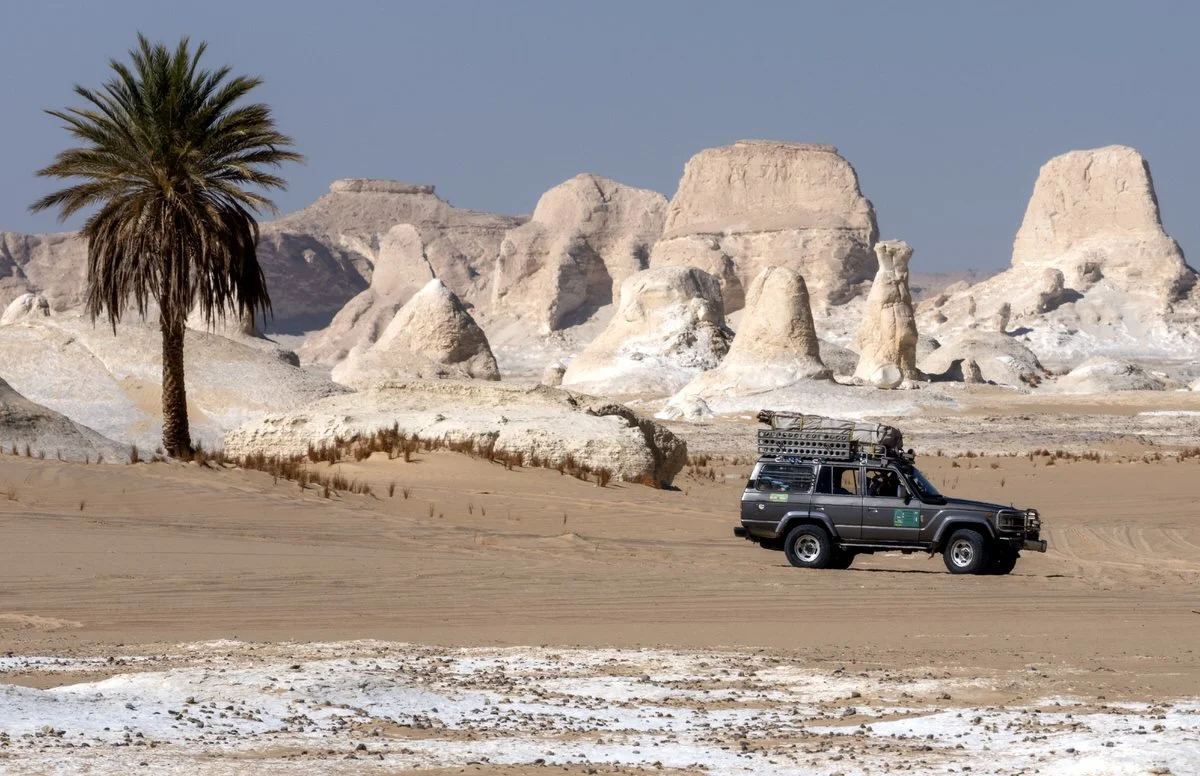
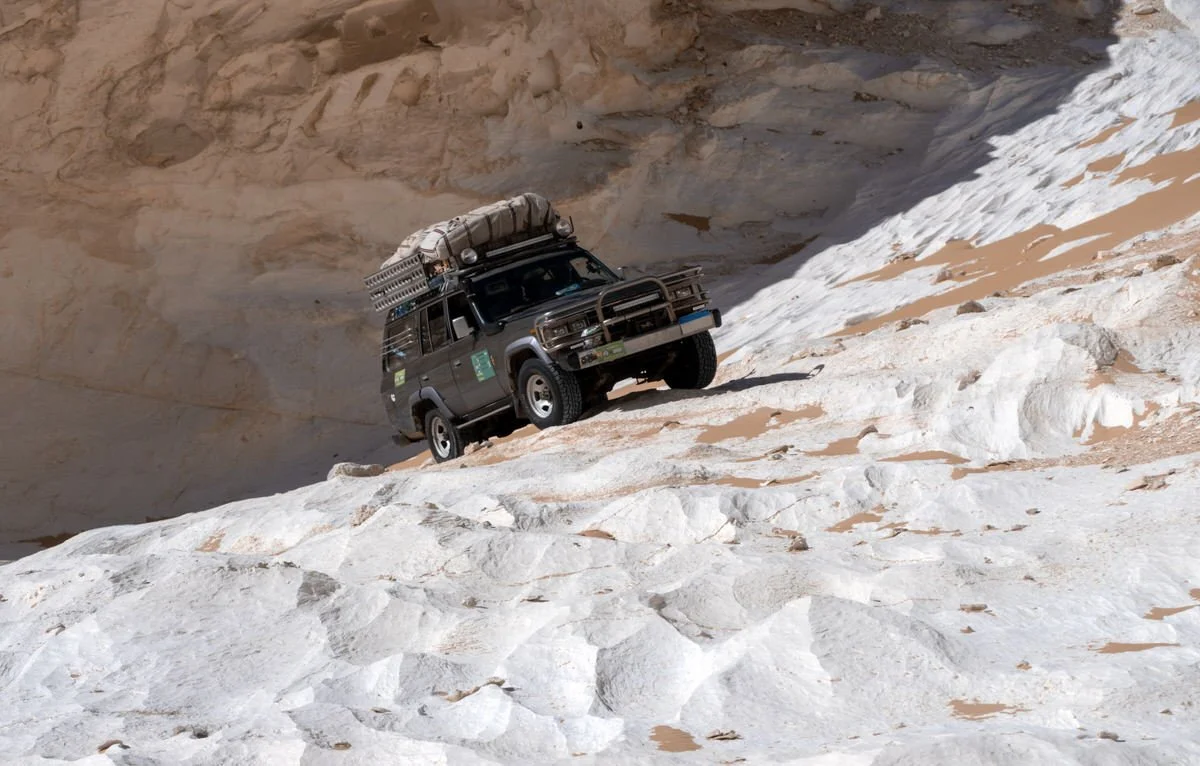
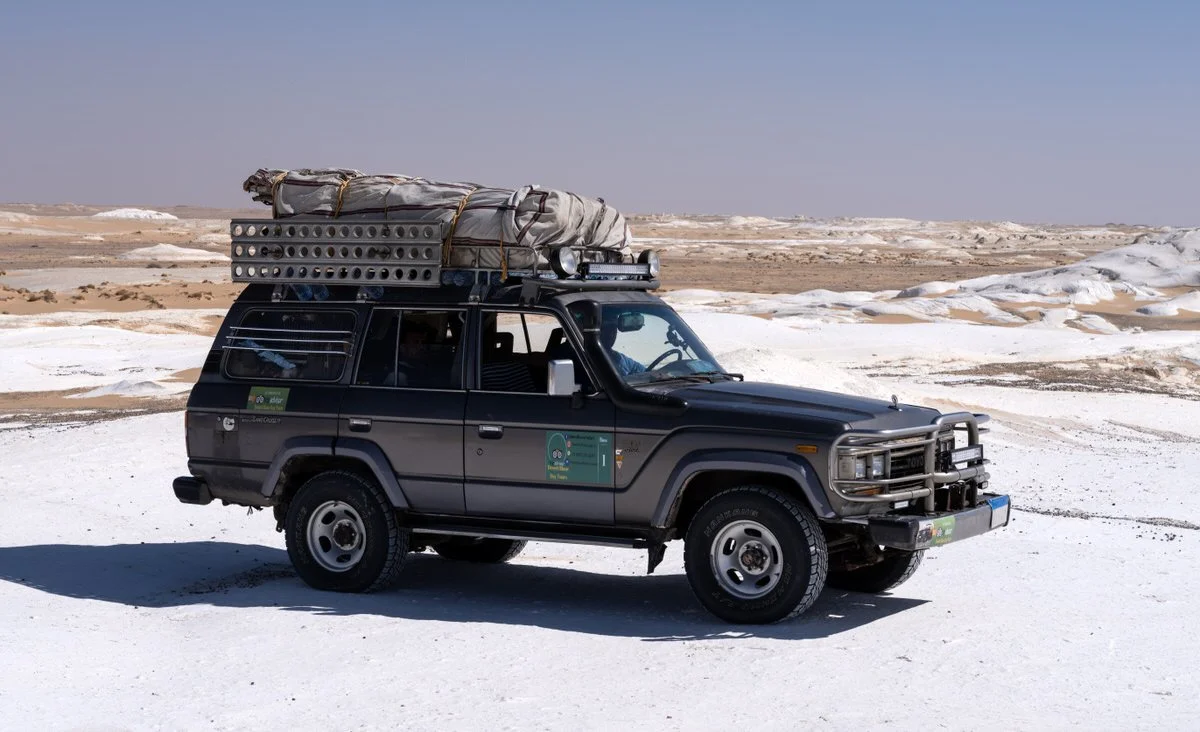
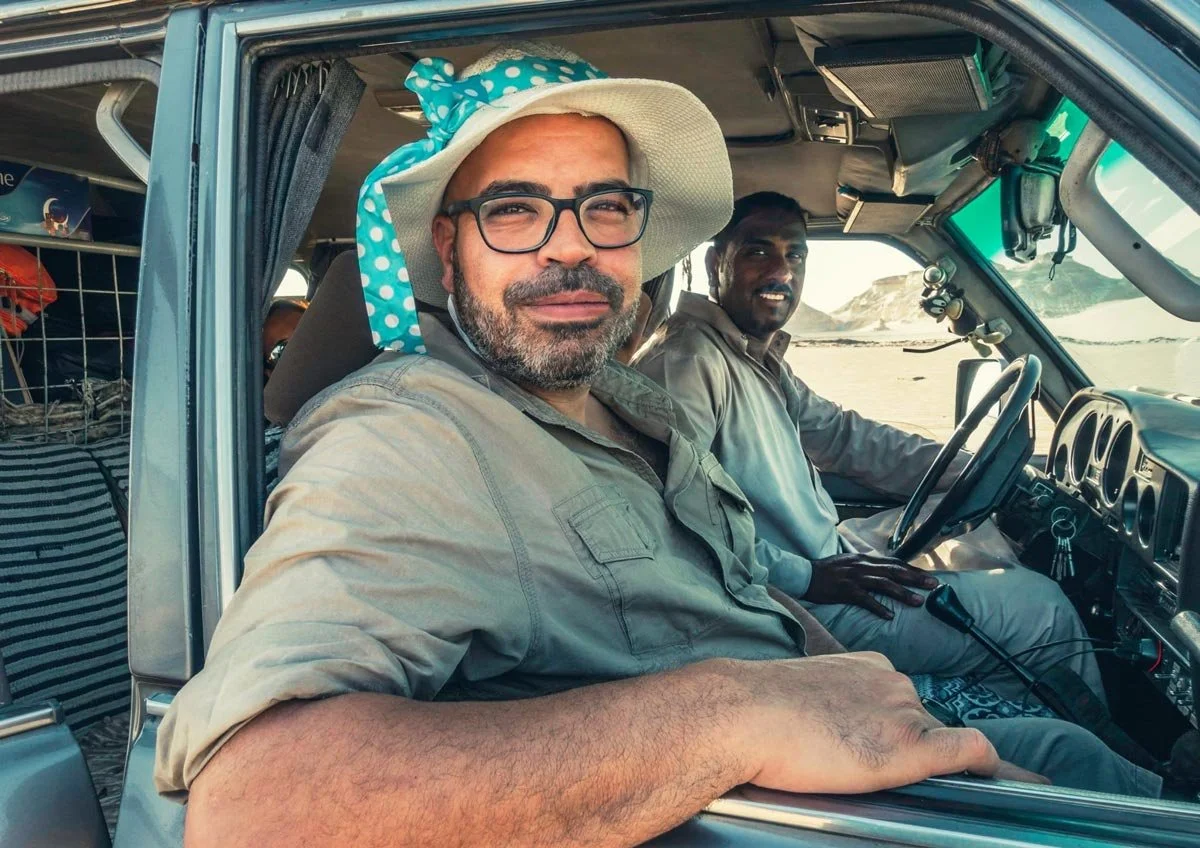
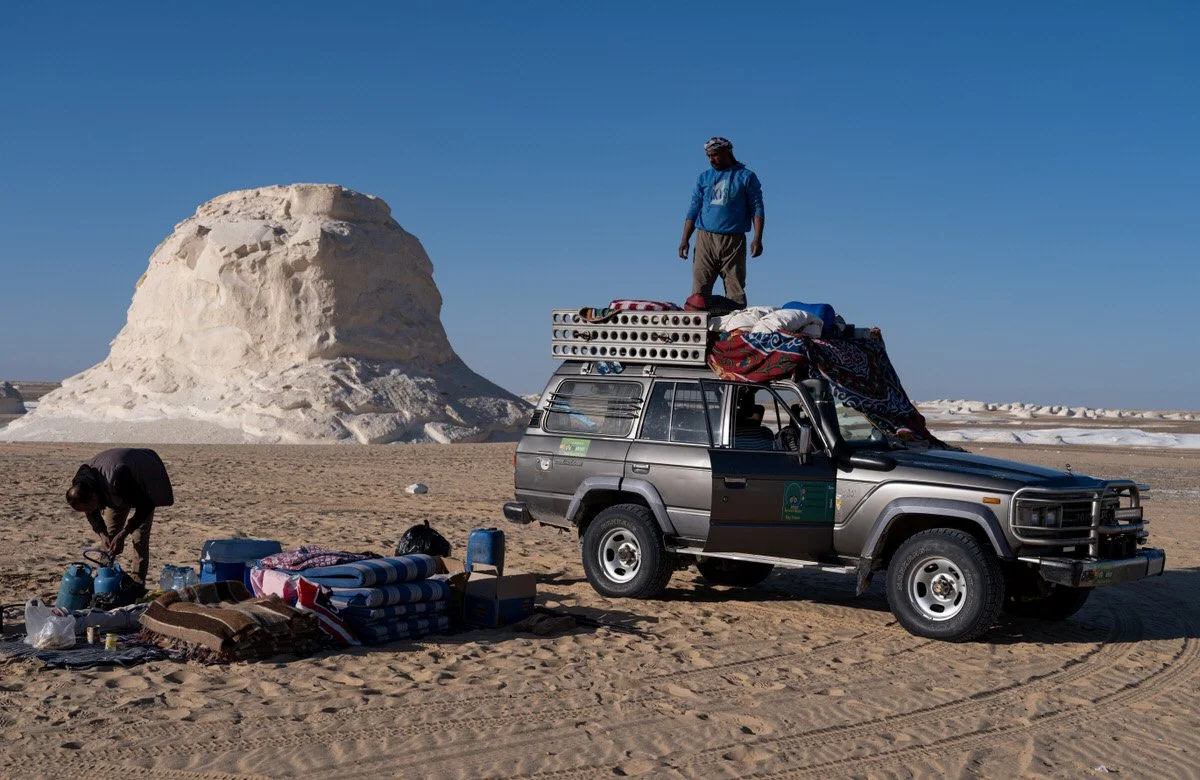
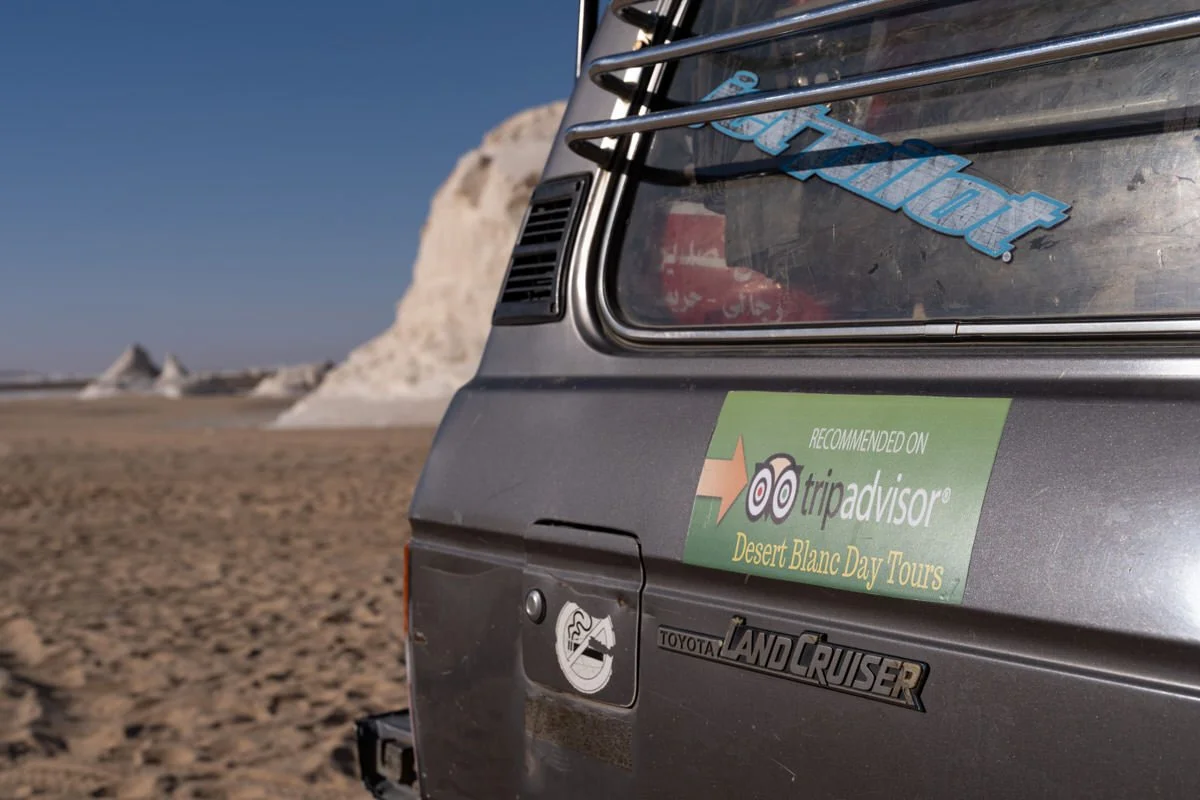
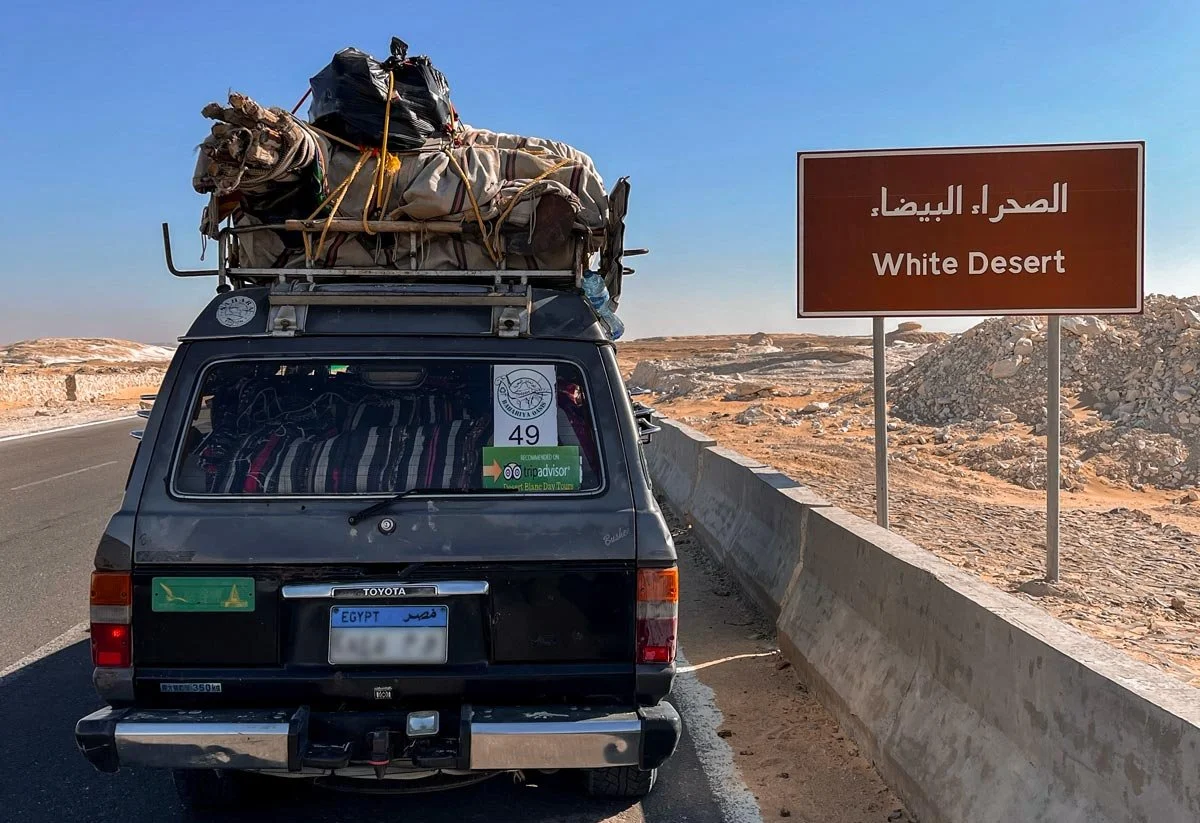
On this visit, I spent six winter days exploring at an unhurried pace, with an old Toyota Land Cruiser 60 Series, a guide named Ahmad who read the desert like a book, and a medium format camera to capture the changing light across the rocks.
Duration: Six winter days.
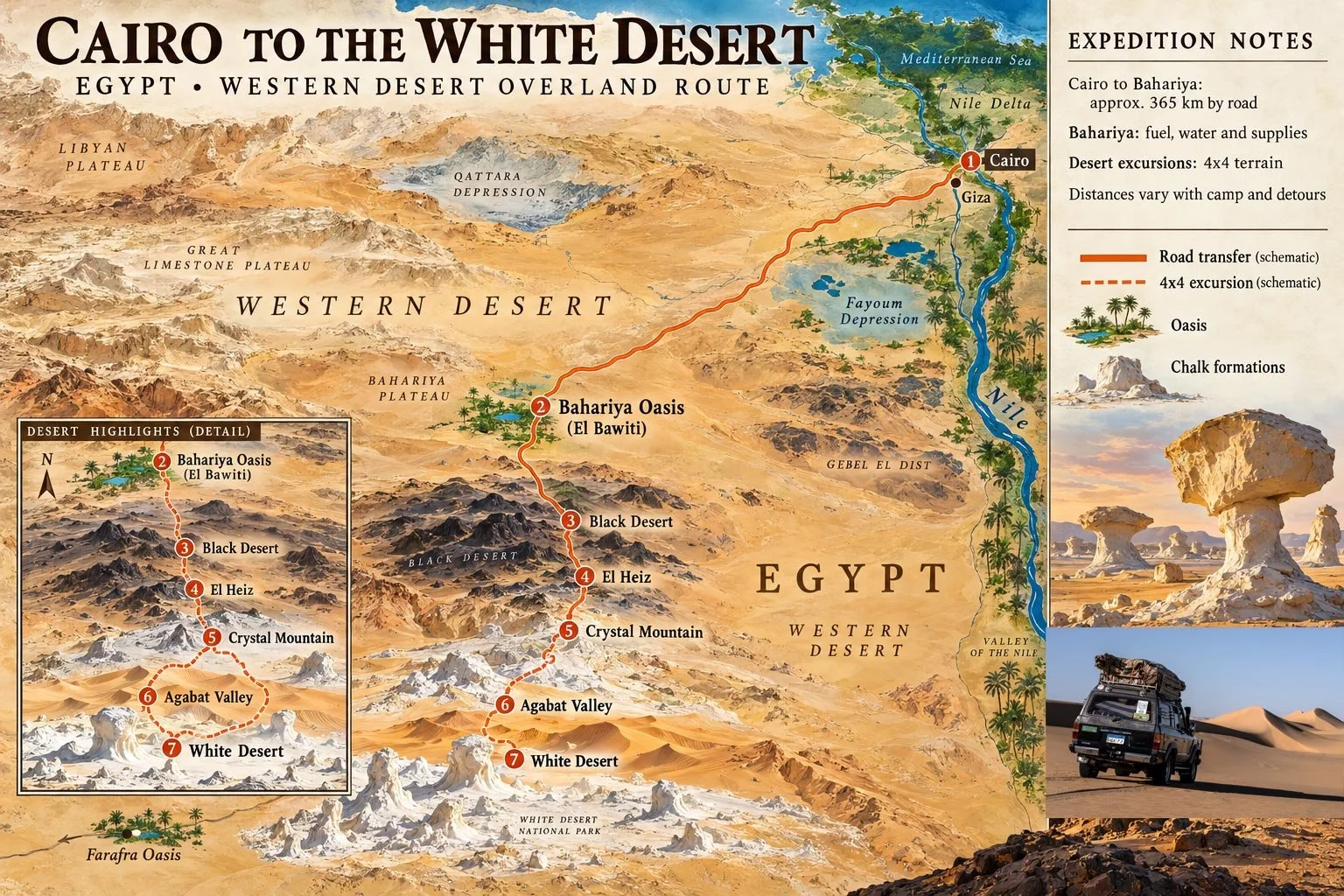
Route: Cairo, Bahariya Oasis, Black Desert, Crystal Mountain, Agabat and White Desert.
Transport: Toyota Land Cruiser 60 Series.
Photography: Chalk formations, sand patterns and changing desert light.
Toyota 60 series
Through the Chalk Valley
The Lone Palm and the Journey
A Desert Companion
Among the Desert Sculptures
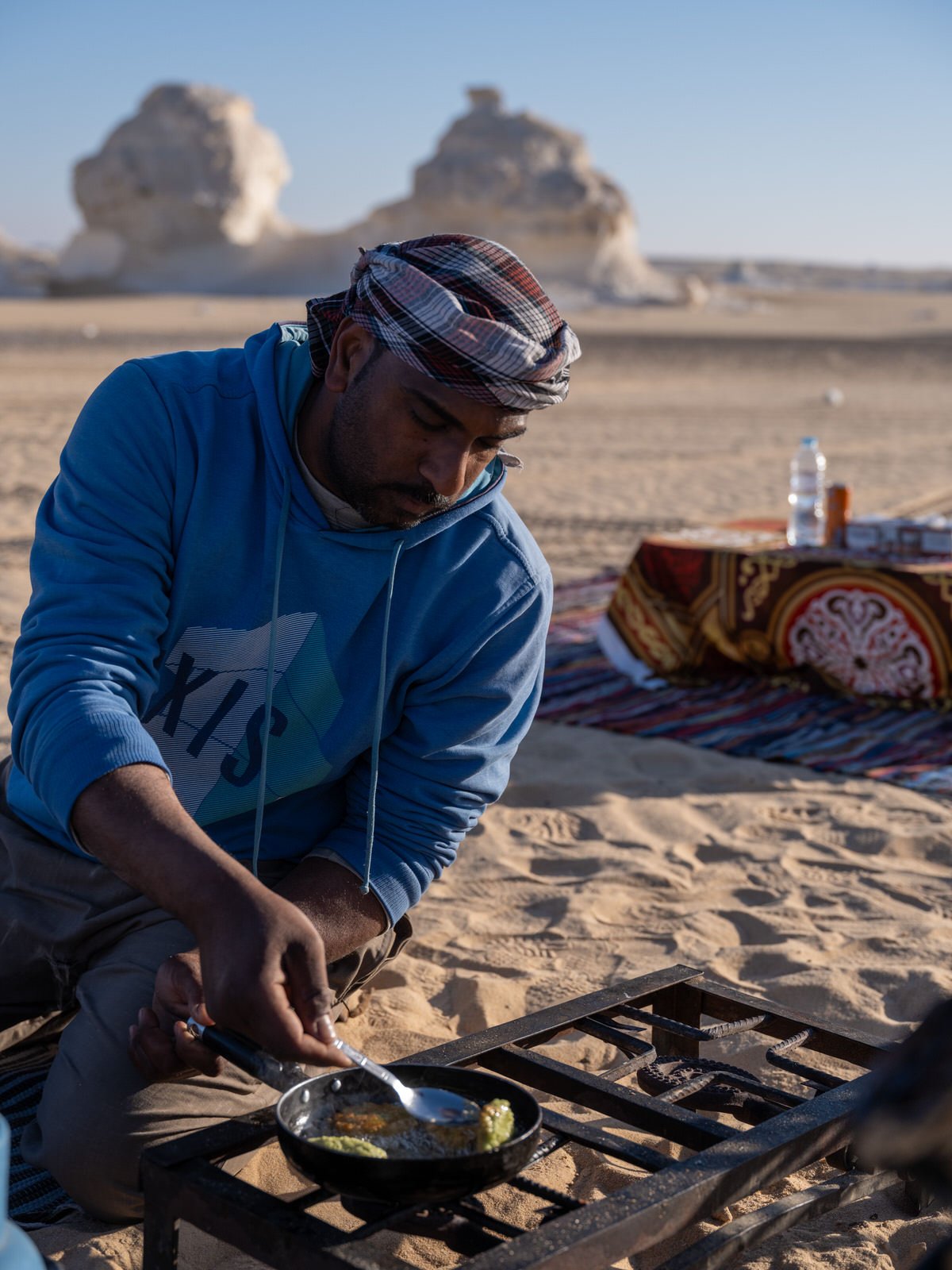
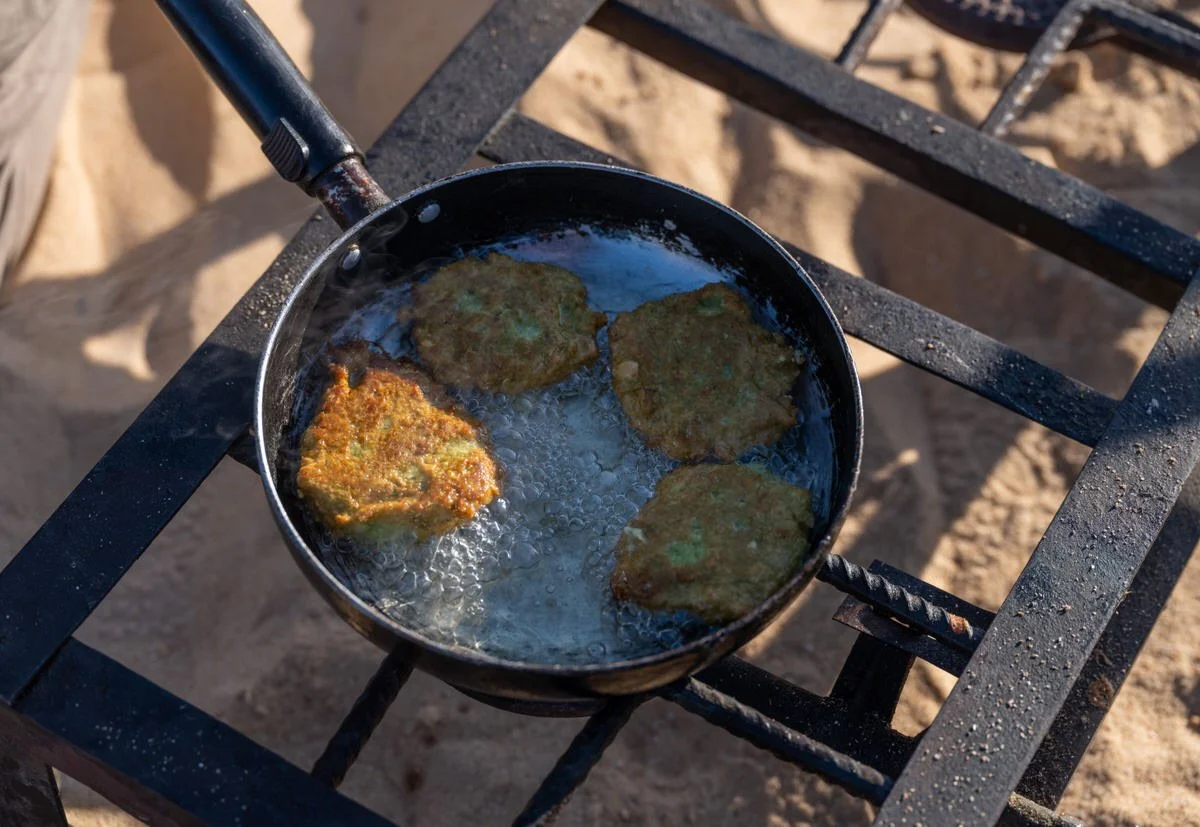
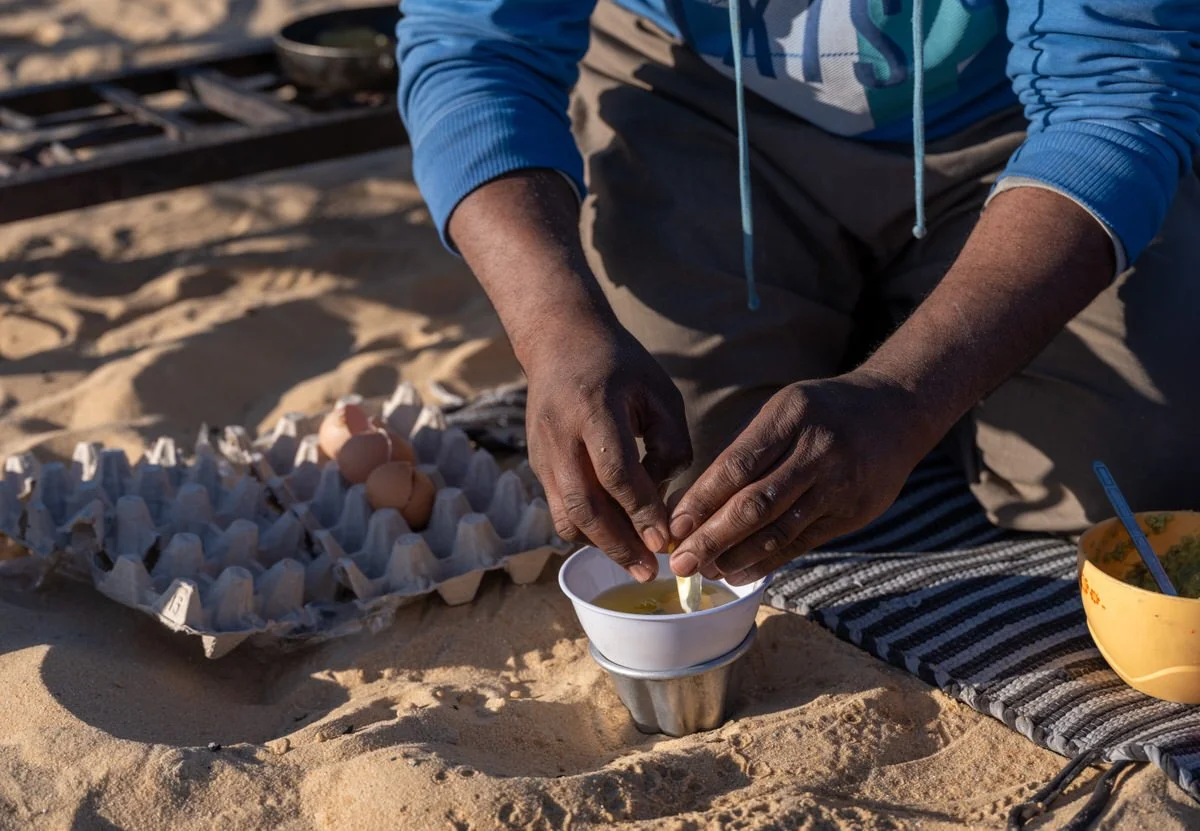
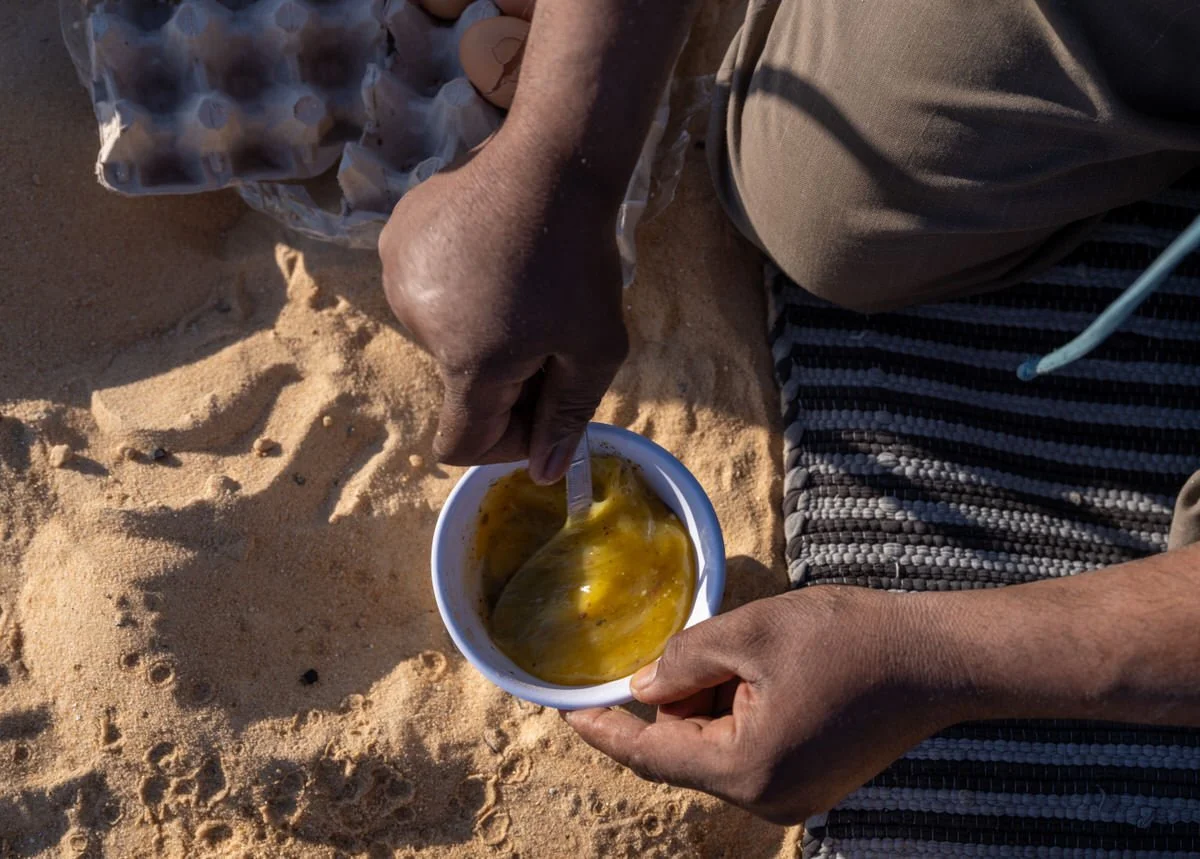
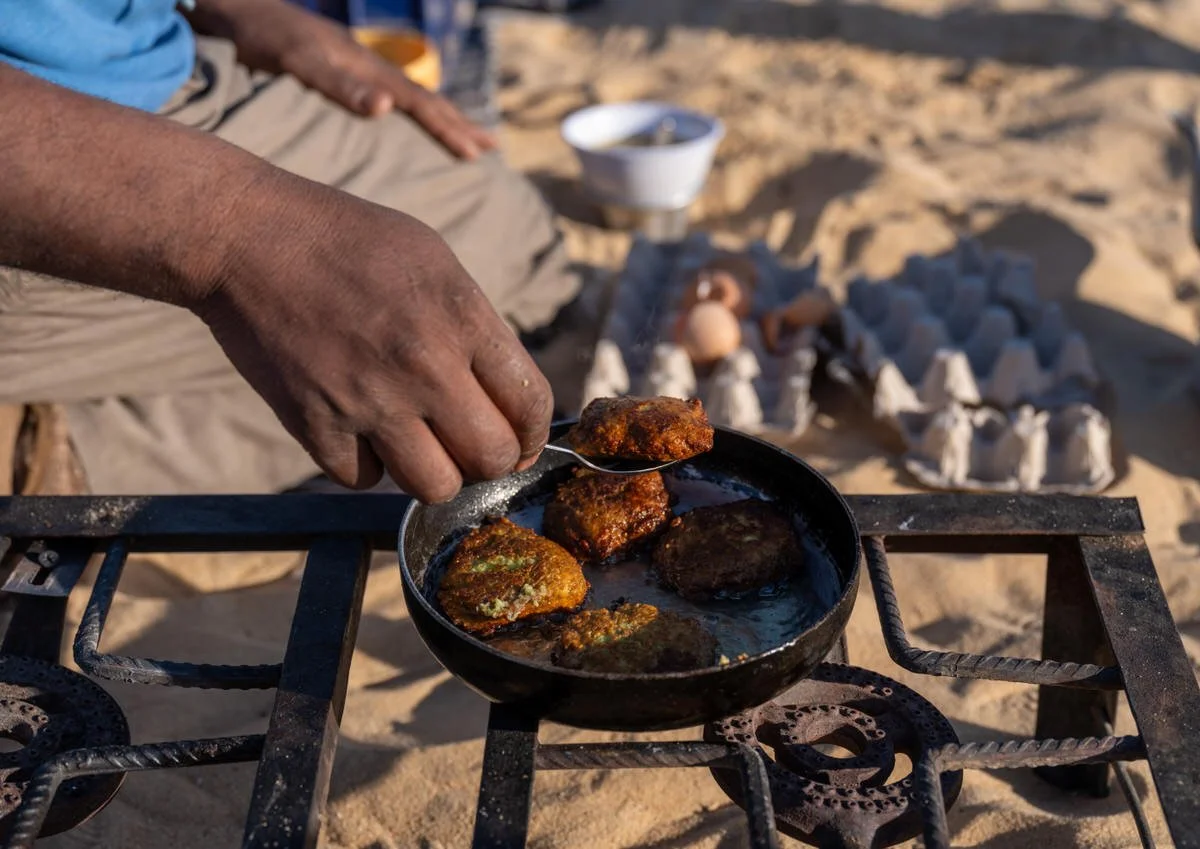
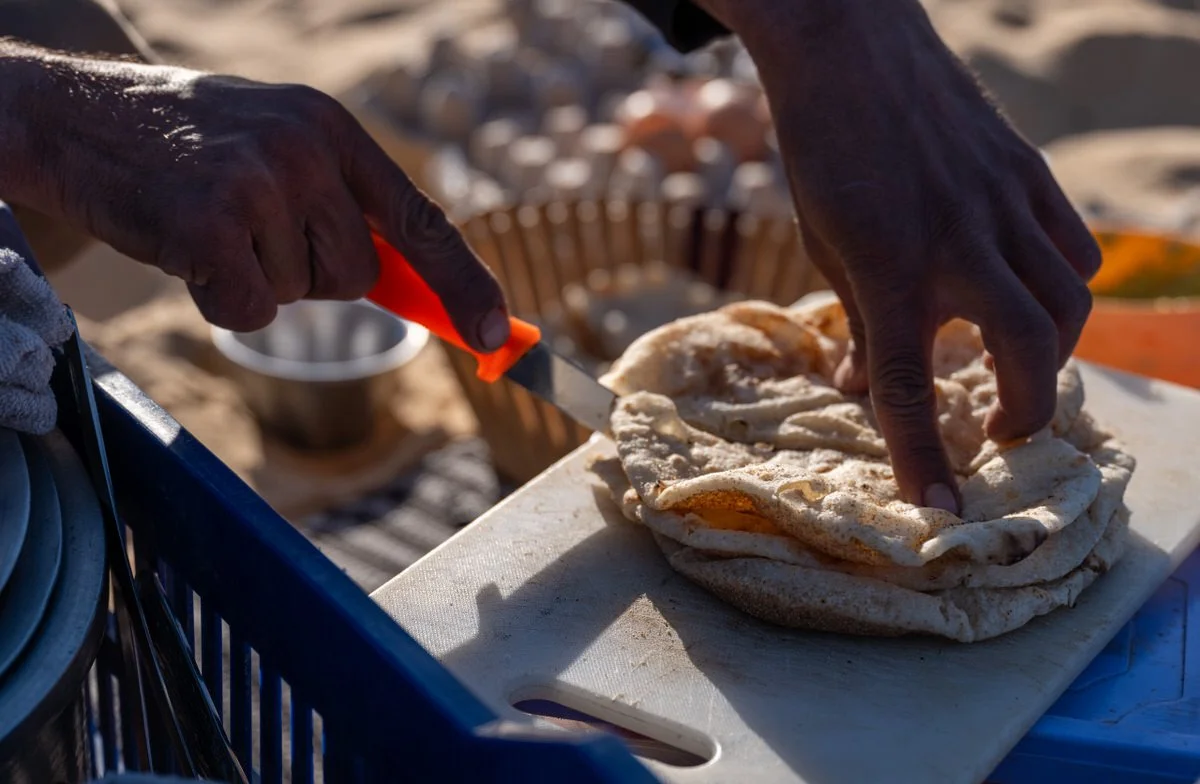
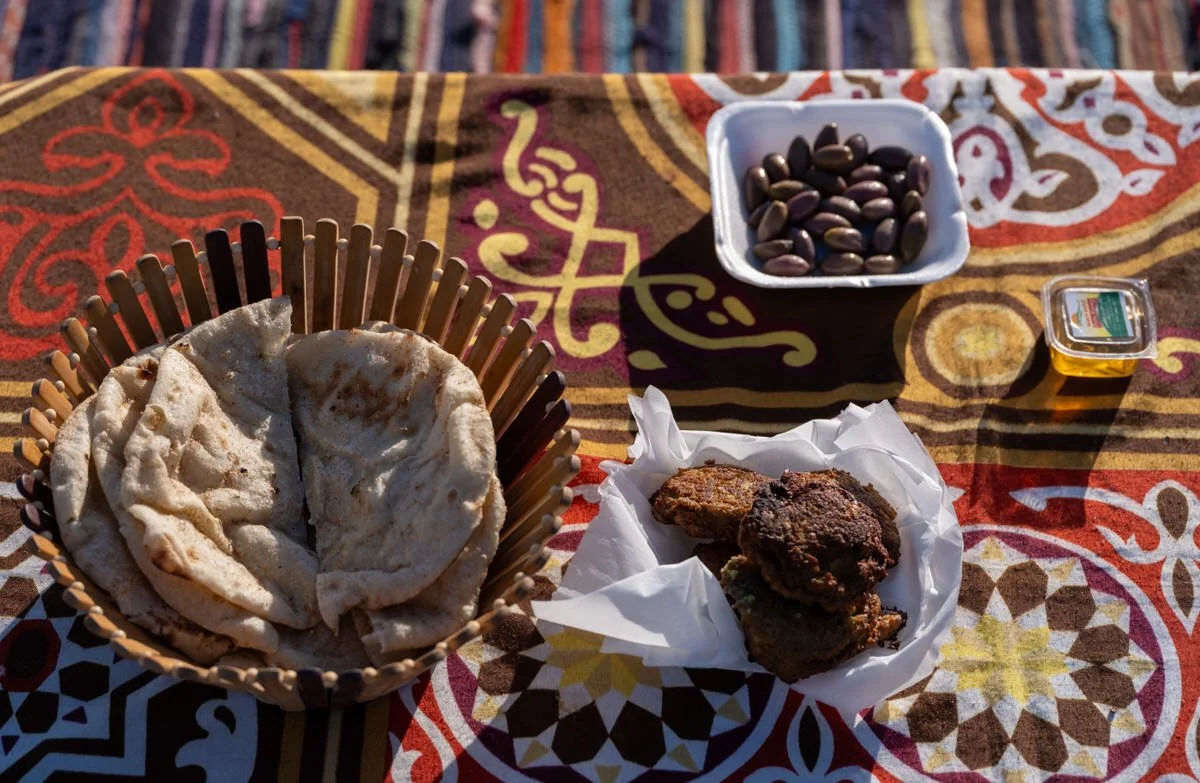
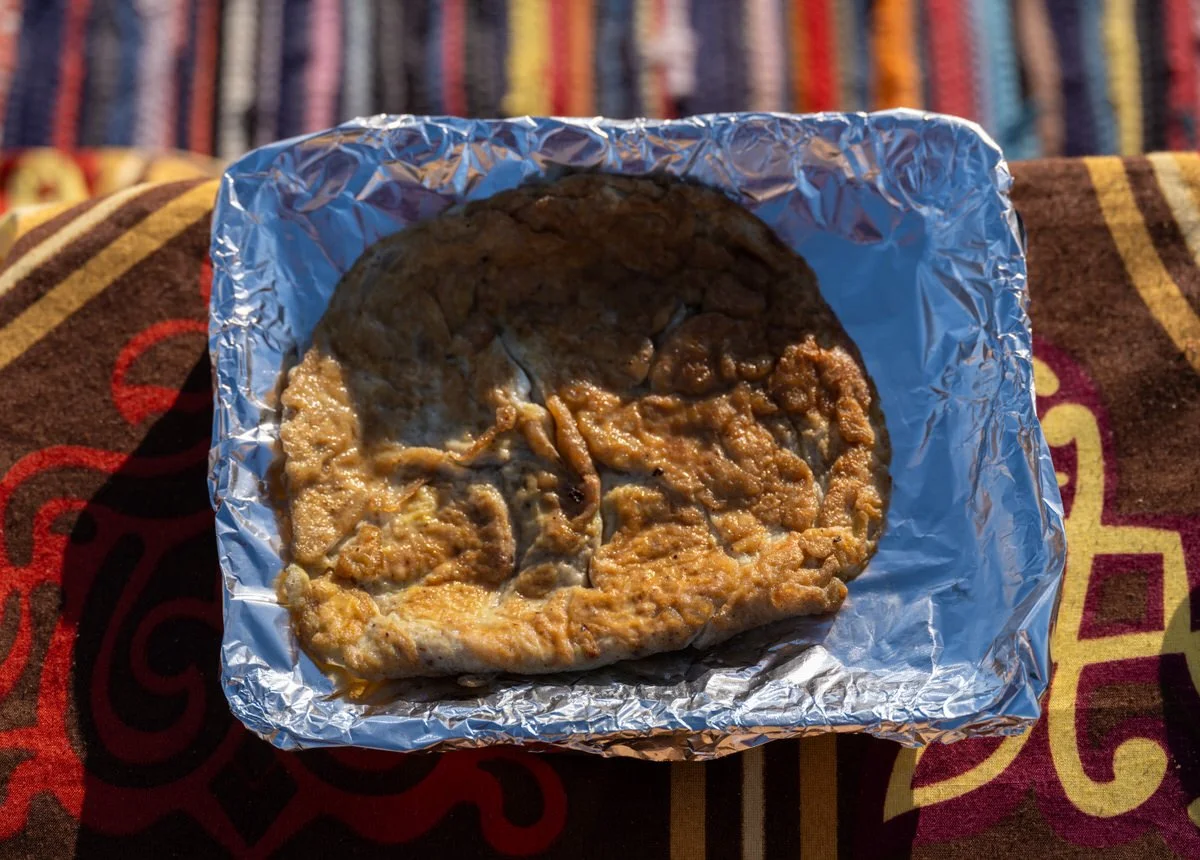
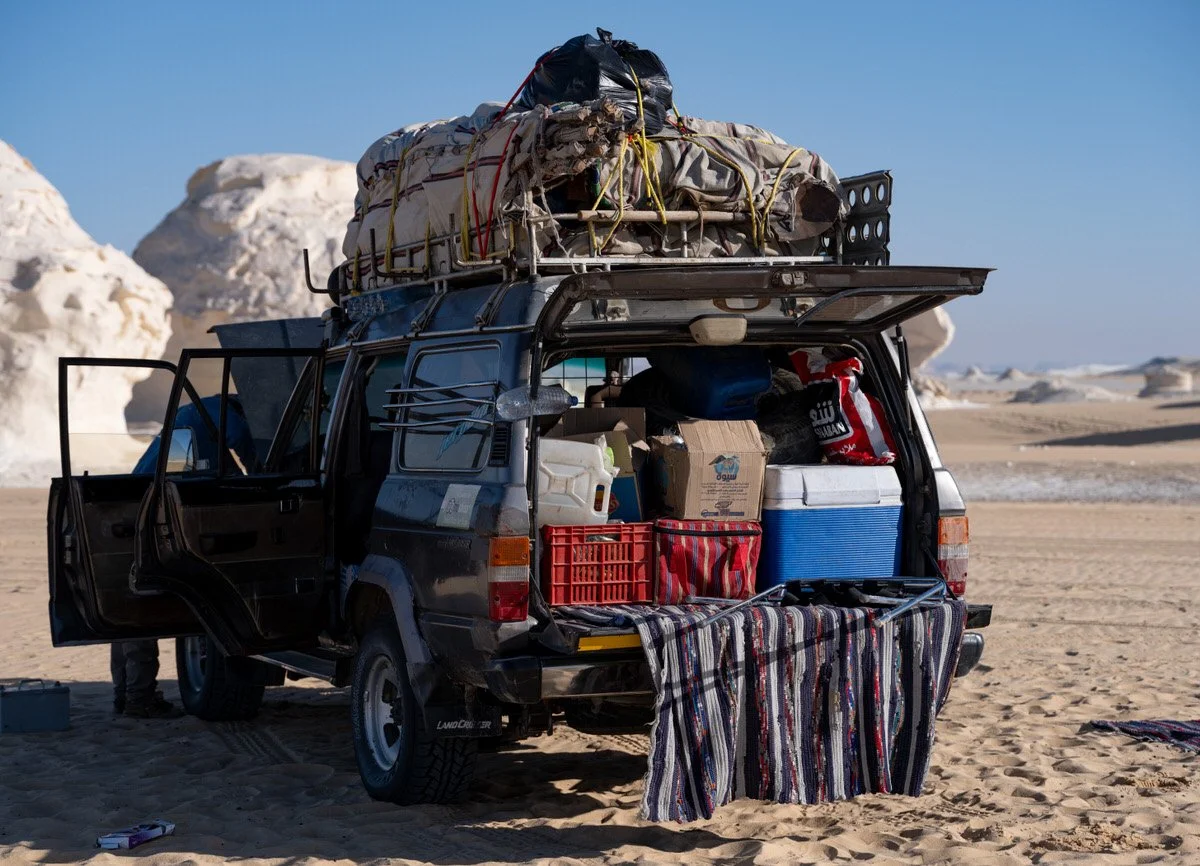
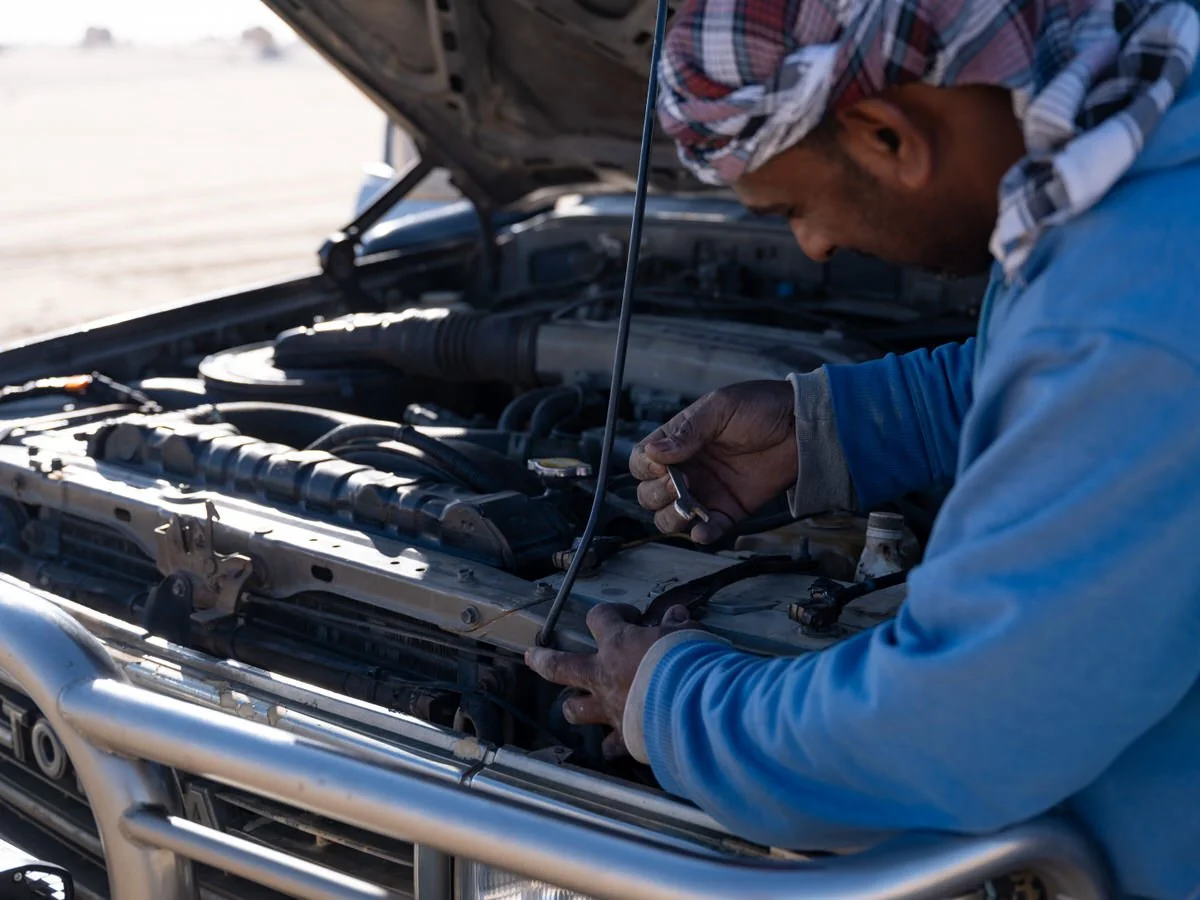
The 60 series is a legend for a reason: no touchscreen, no fancy electronics, just a tough machine Ahmad could fix with a few tools. Each day meant hours of bouncing across sand, gravel plains and rocky tracks with the windows down. We camped every night. Winter days were pleasantly warm, but after sunset the cold set in fast, so a campfire, thick blankets and Bedouin tea became part of the routine. Ahmad also cooked over the fire and shared stories about the desert his family has known for generations
Where it is, and the road in
The route to the western desert (AI GENERATED)
Toyota Land Cruisers at Wadi Agabat,
in the Shadow of Desert Giants,
The White Desert lies in Egypt's Western Desert, within the Farafra Depression, roughly 500 km southwest of Cairo and a short drive north of Farafra Oasis. Most travellers reach it through Bahariya Oasis, combining the journey with stops at the Black Desert and Crystal Mountain, just as we did. Declared a protected area in 2002, it is home to fragile chalk formations that make this landscape so remarkable.
The drive from Cairo is fairly uneventful, with little to break up the journey beyond a few roadside stops for fuel and snacks. Once you reach Bahariya Oasis, though, the landscape begins to change, and the journey becomes much more interesting.
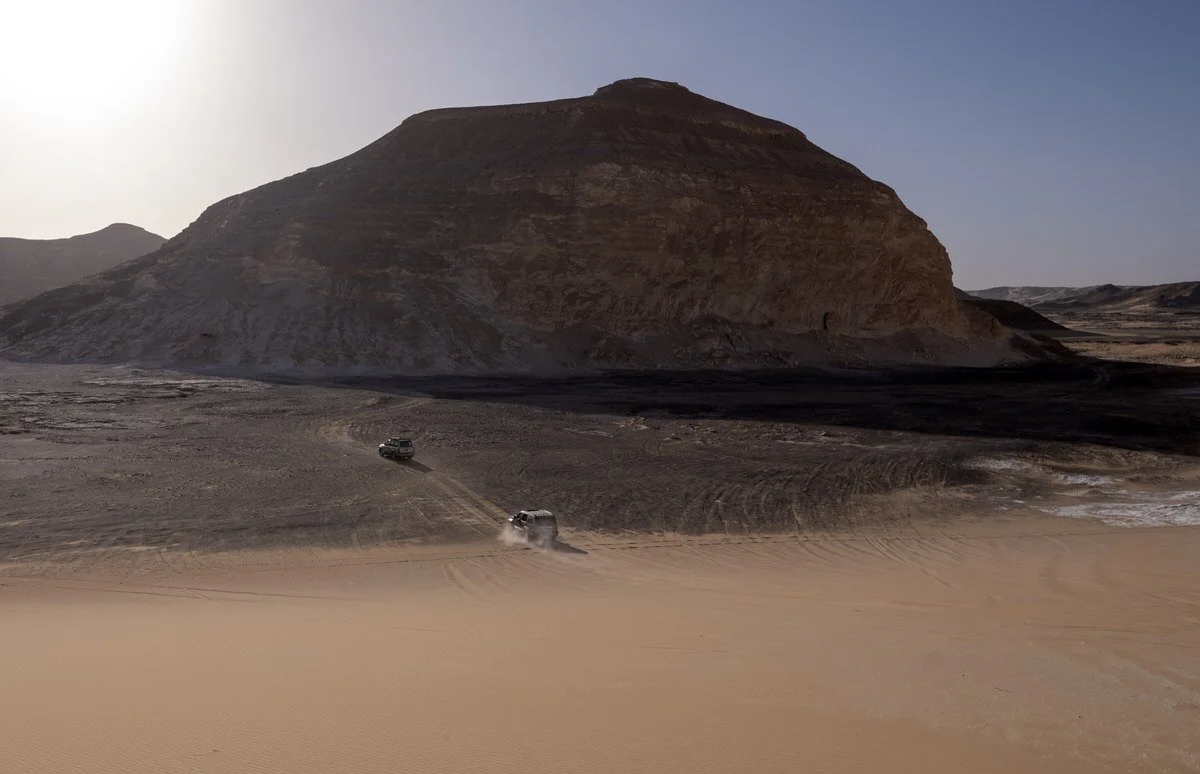
Our next stop is the Black Desert, with its distinctive dark mountains rising from the surrounding sand. Unfortunately, every visit so far has brought me there around midday, when the harsh light makes it difficult to capture the photographs I have in mind. On my next trip, I hope to arrive in softer light and give this unique landscape the time and attention it deserves.
Further along, we stop at Crystal Mountain, a fascinating formation and a popular stop for visitors. It feels a little touristy, but it is worth taking a moment to explore. By now, we are close to entering the White Desert National Park, and I can feel the anticipation building. Soon, we leave the road behind and begin exploring the extraordinary landscapes that keep bringing me back to this part of Egypt.
A landscape shaped by an ancient sea
The White Desert Guardian
Sculpted Silence
A Shadow in the Silence
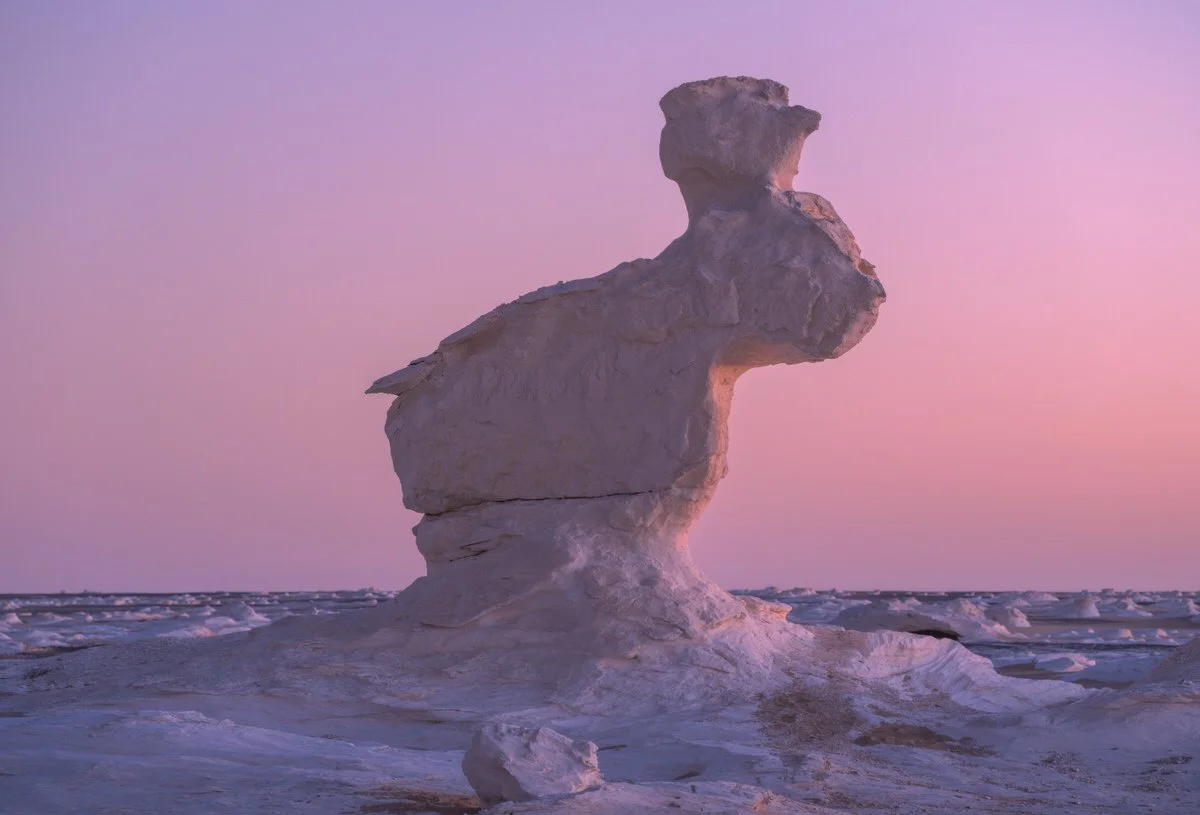
Standing among the White Desert’s chalk formations, it is hard to believe this dry, silent landscape once lay beneath the sea. Around 70 million years ago, during the Late Cretaceous, shallow marine waters covered this part of Egypt. The remains of tiny marine organisms settled on the seabed and slowly became the chalk and limestone I now photograph.
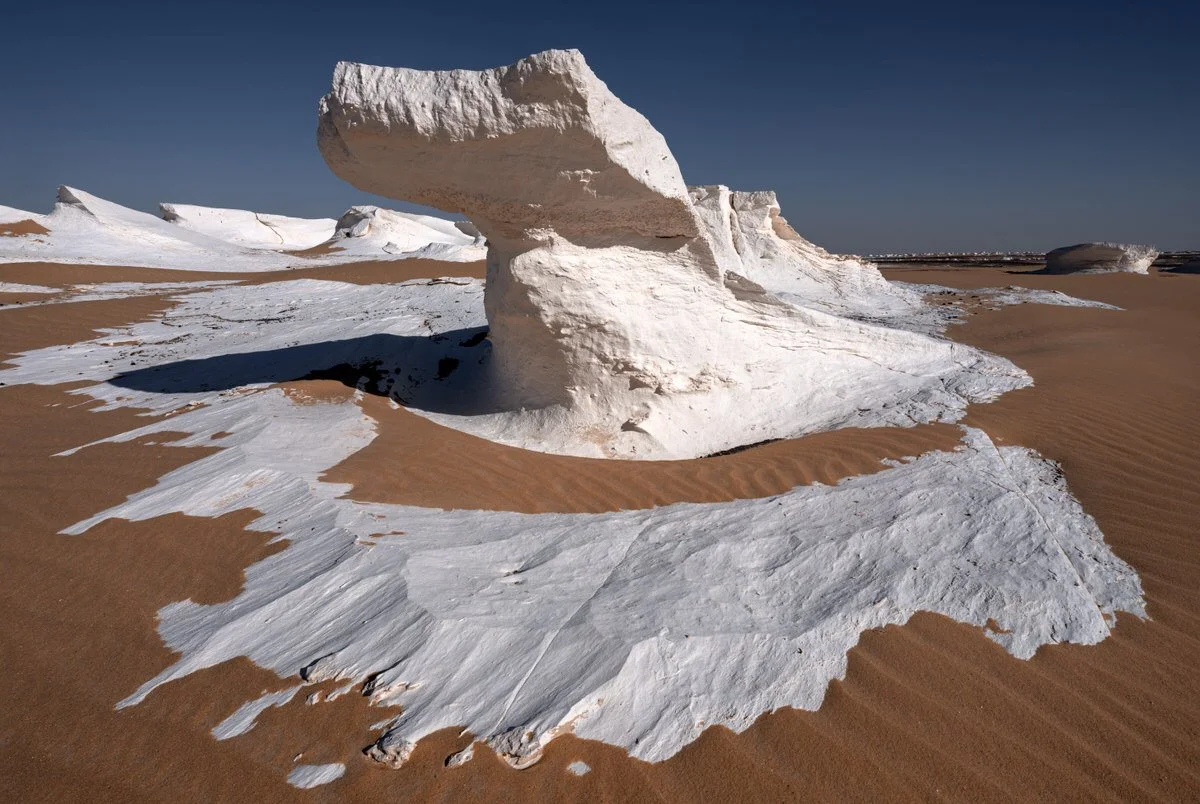
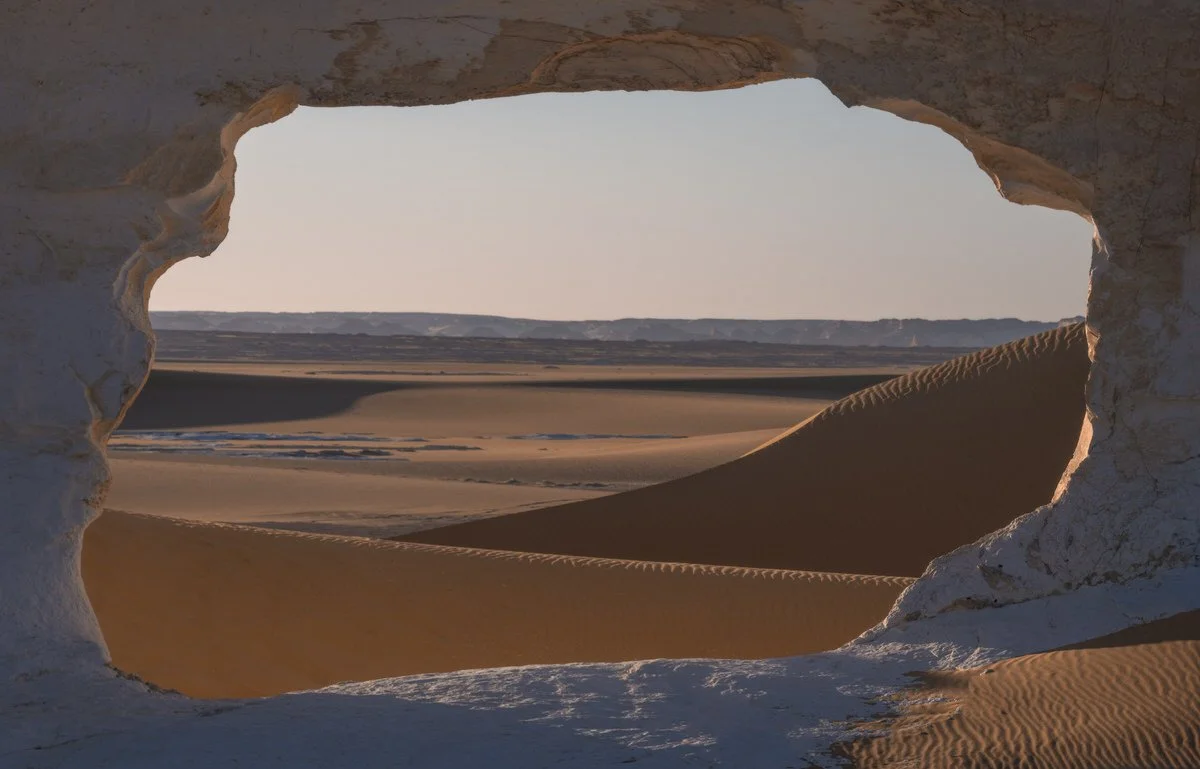
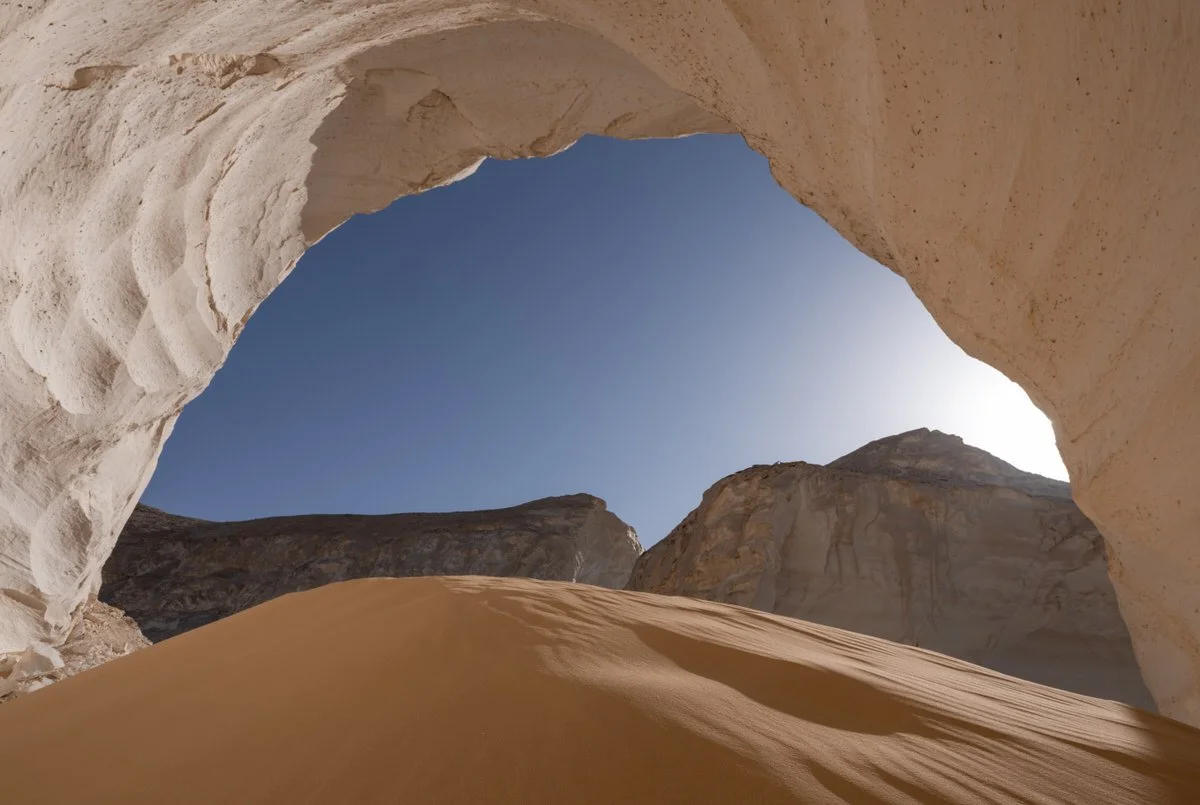
I find it helps to know how a subject was made before deciding how to frame it. As the waters retreated and the rock was exposed, wind-carried sand wore away the softer sections while the more resistant parts held on. Water also played its part, dissolving limestone and shaping caves and other features long before the landscape looked as it does today. That is why so many formations stand on narrow bases, and why their surfaces are full of hollows, ridges and delicate curves.
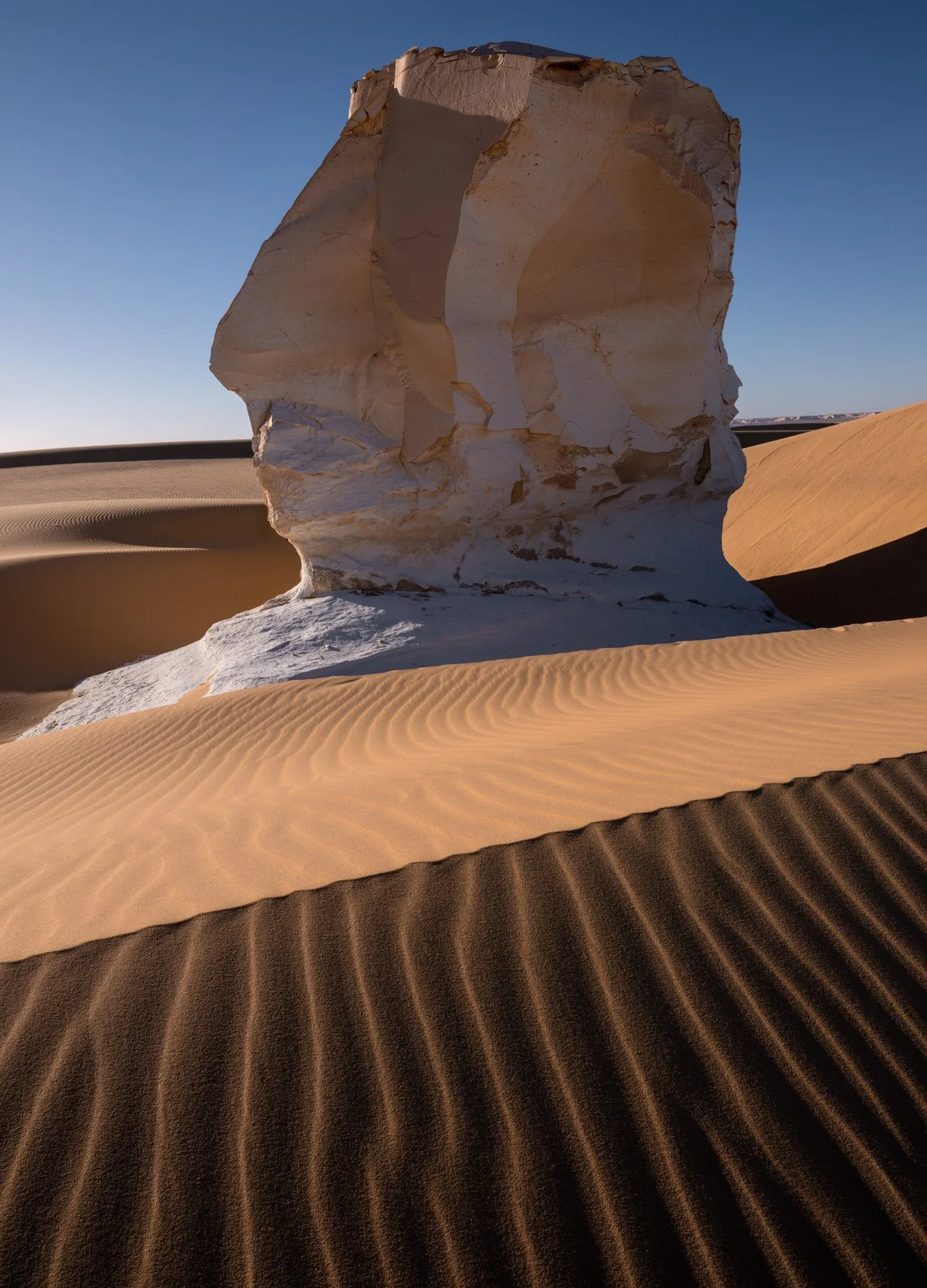
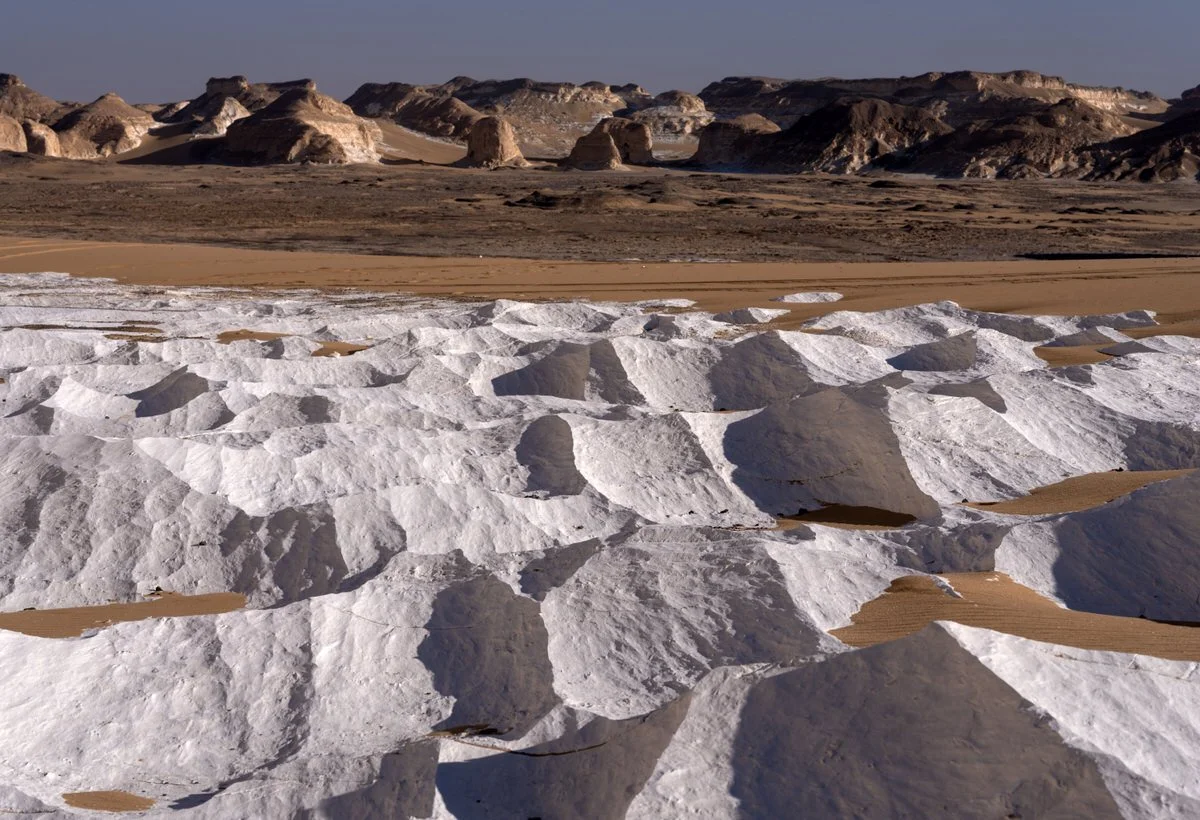
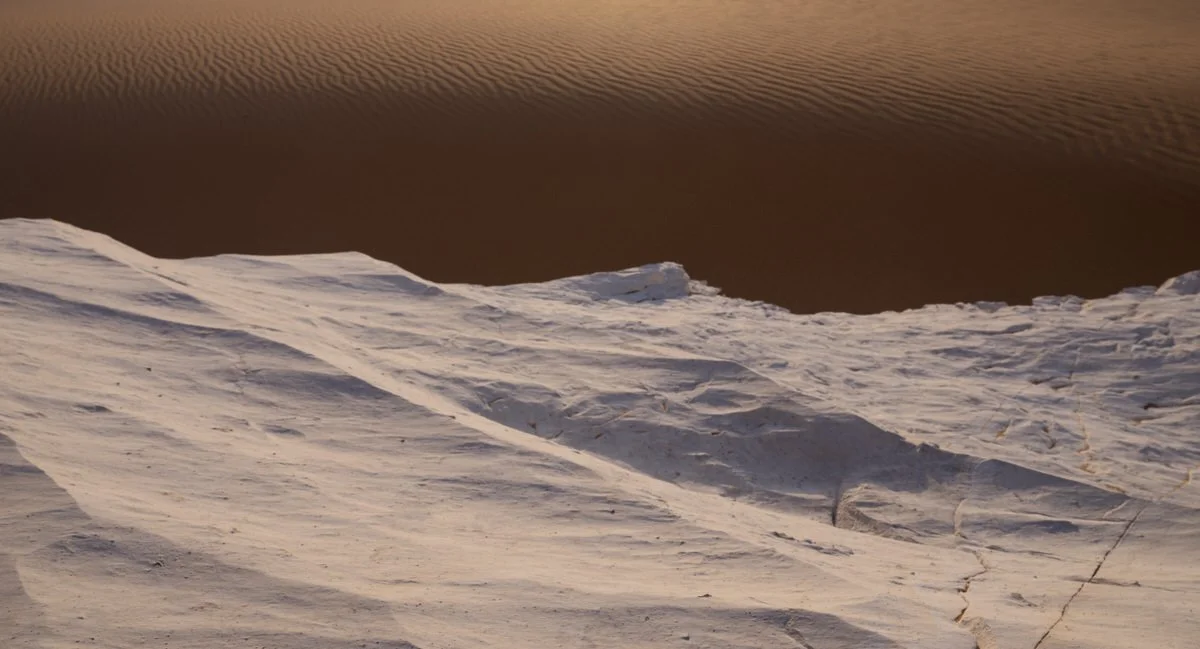
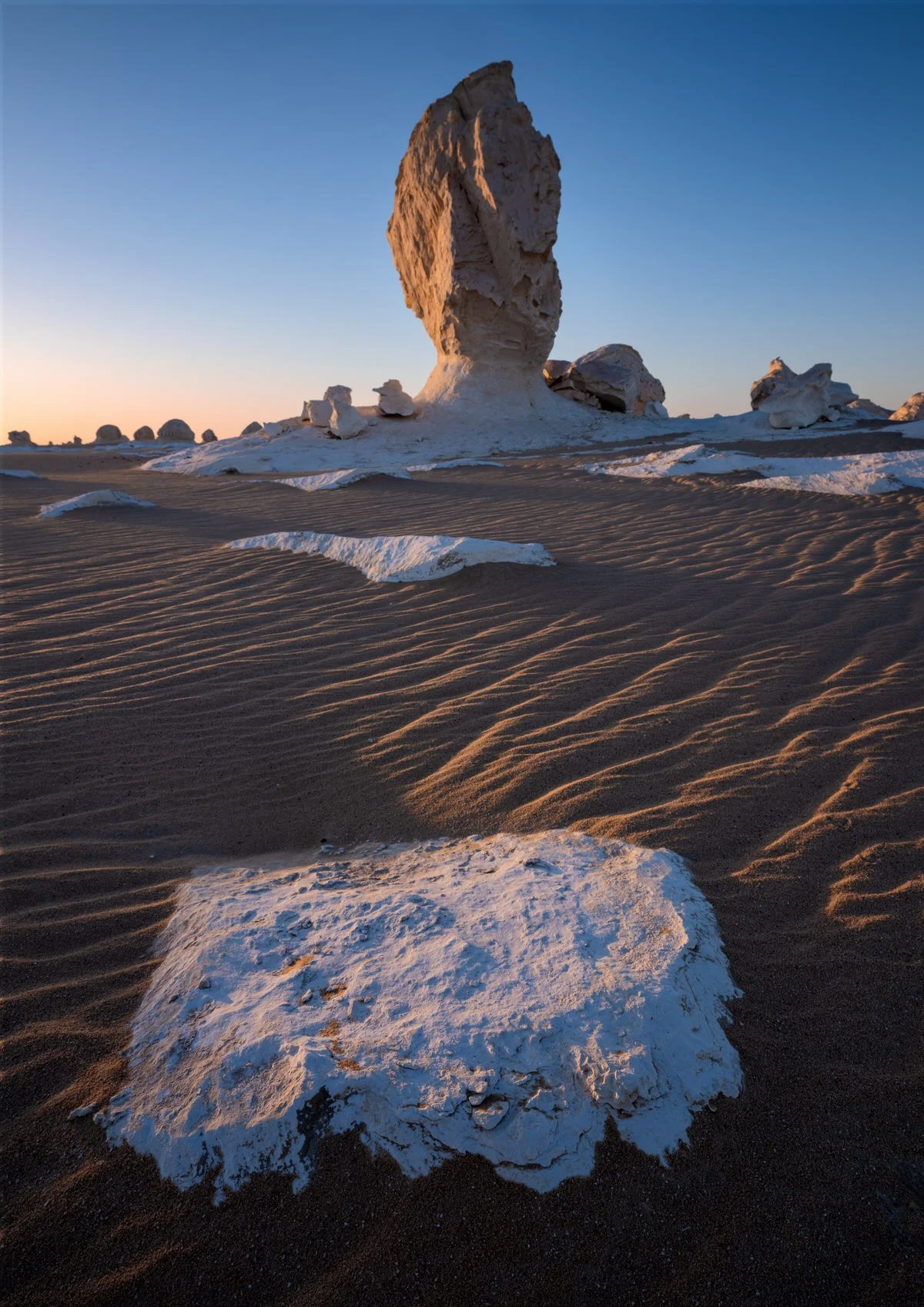
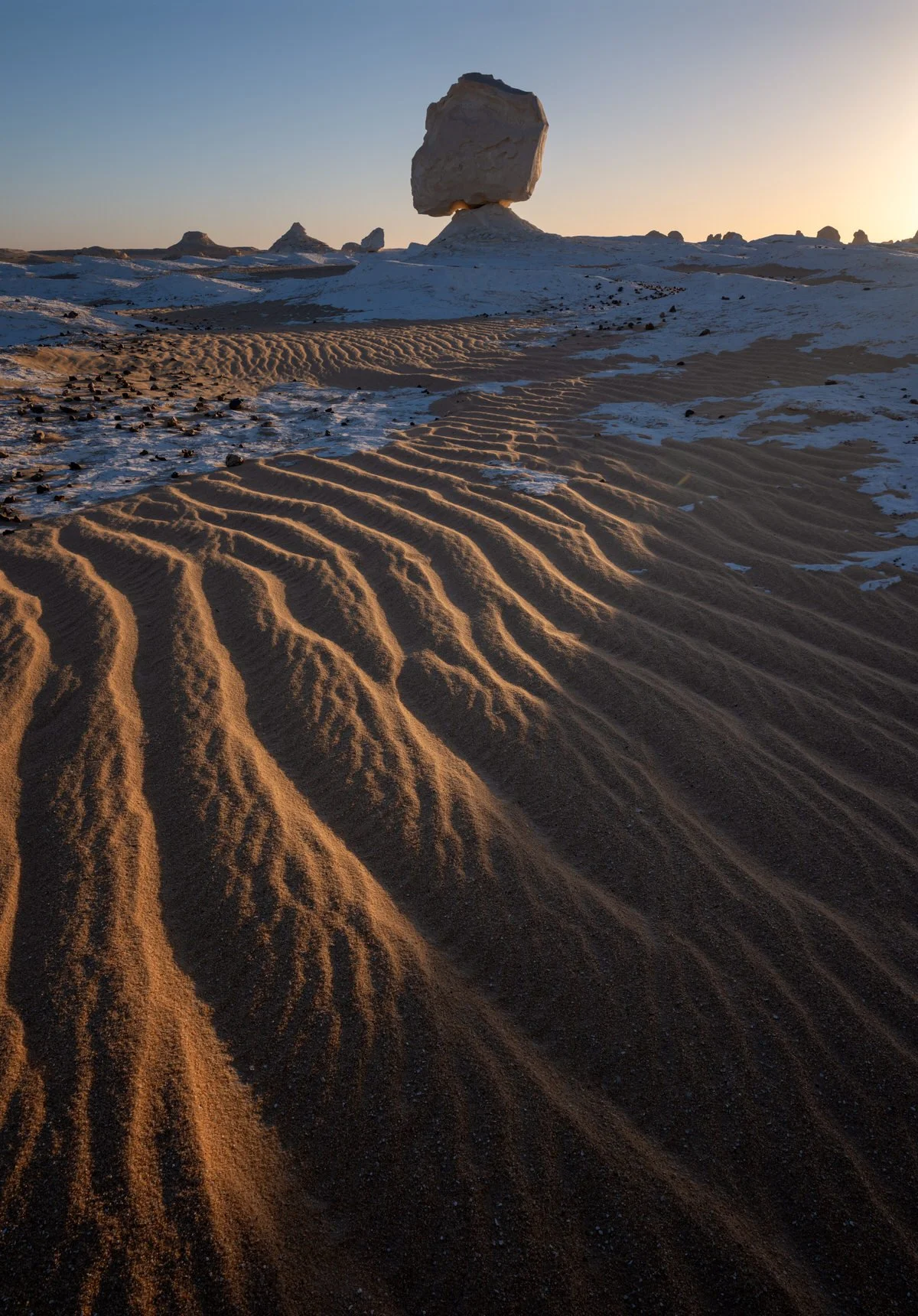
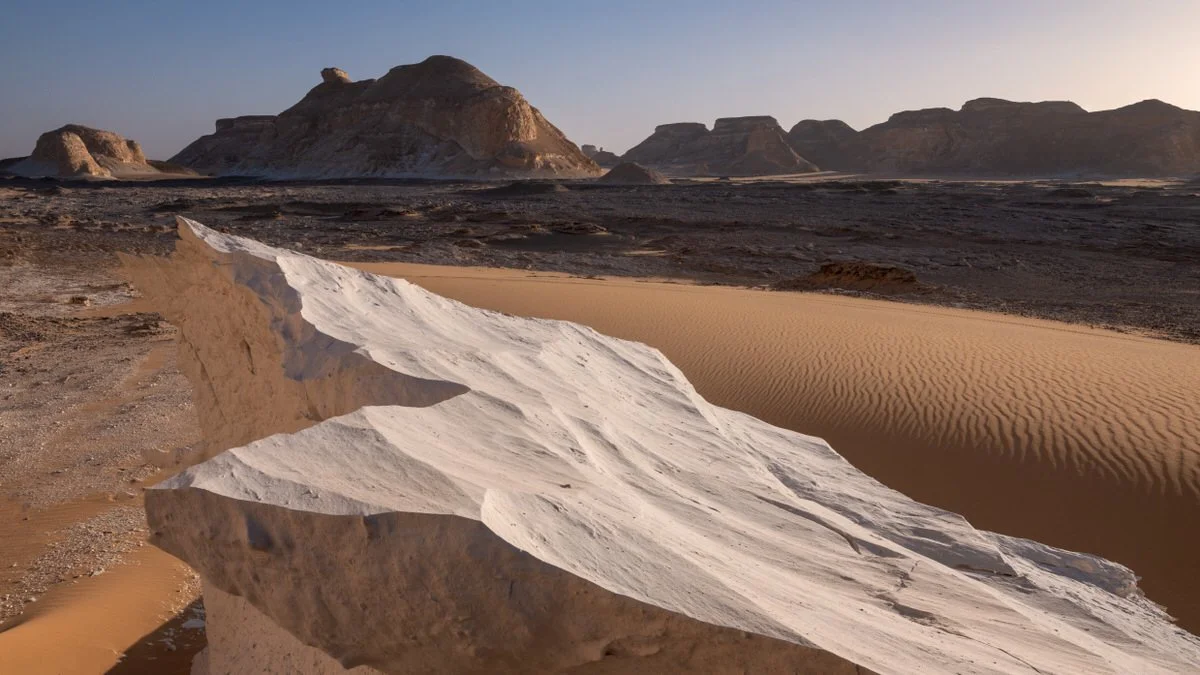
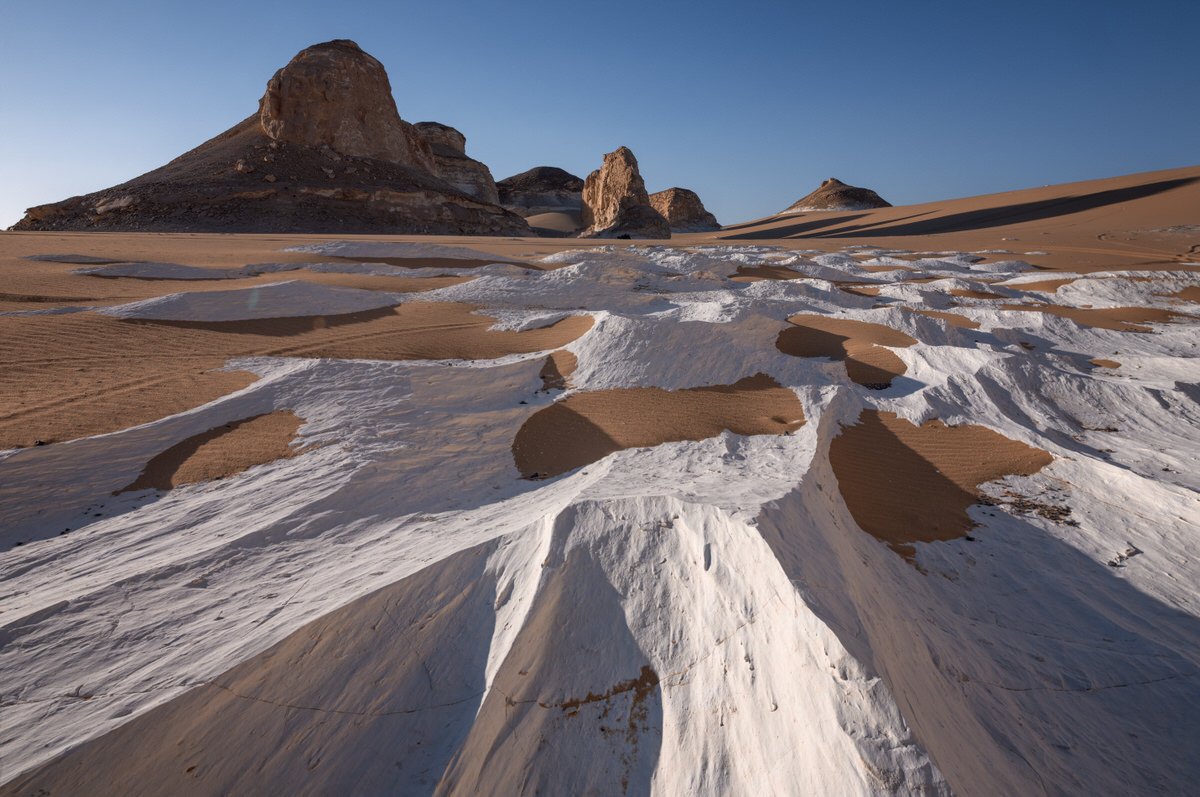
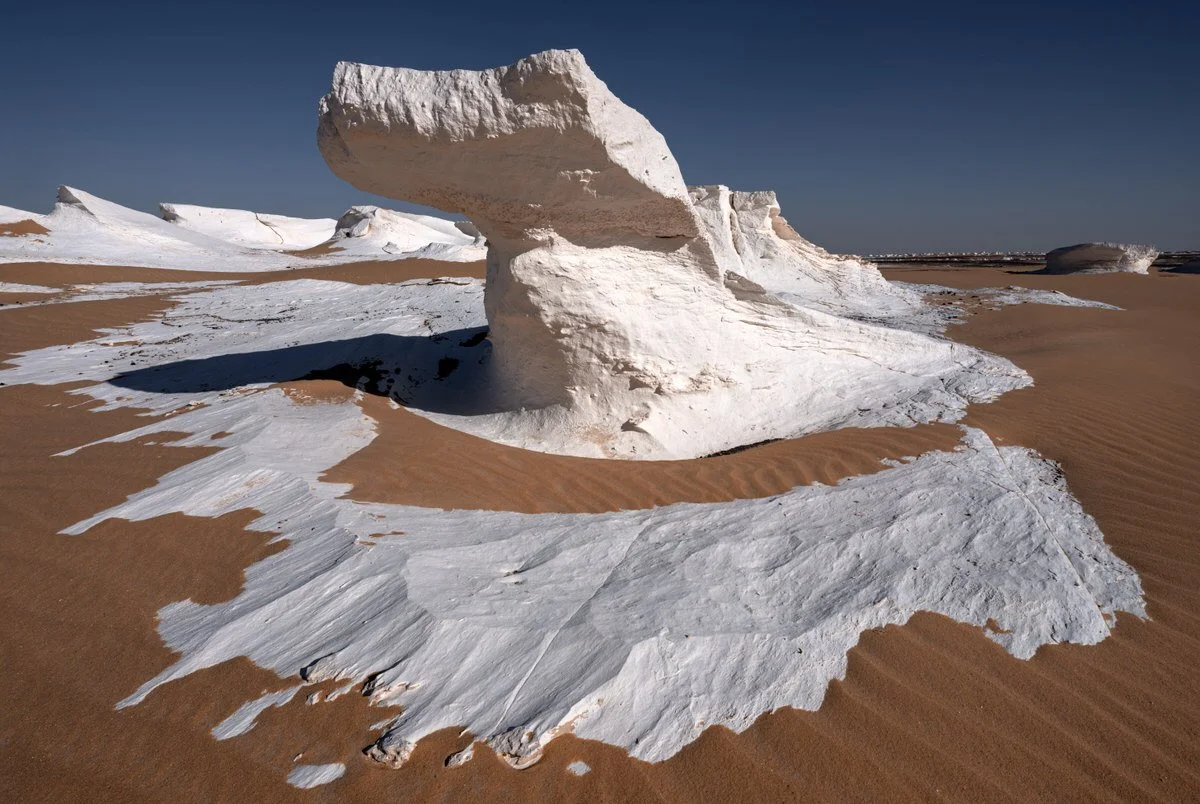
This is exactly what a foreground-driven photographer wants. From a distance the rock looks almost smooth, but up close it is a field of texture. Getting low and close with the wide zoom turns a single eroded surface into the anchor of the whole frame, with the larger formations stepping back behind it.
Fossilised shells and sea urchins add another layer of story. They are reminders that the desert has not always been a desert, and I treat them as part of the scene, not as souvenirs. They belong where they are, within the protected environment. I photograph them where I find them, and leave them there.
Knowing a little of this history changes how I see the place. Each formation is a fragment of an ancient seabed, and my job is to show that in the texture.
Why these shapes work as subjects
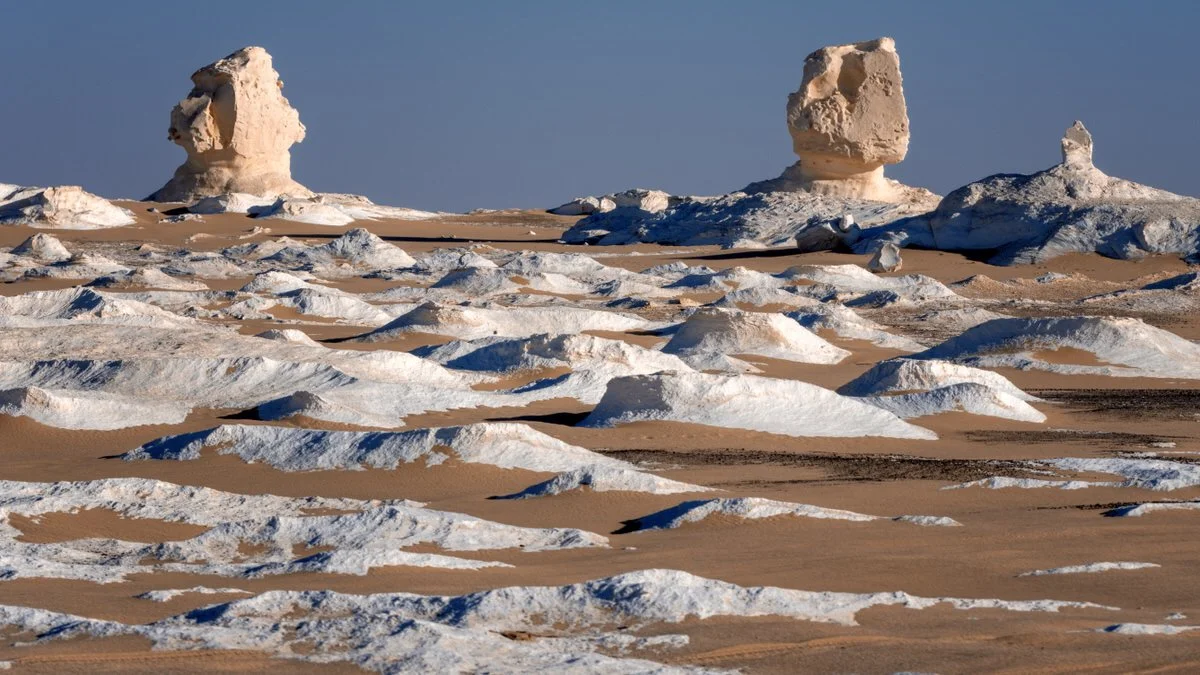
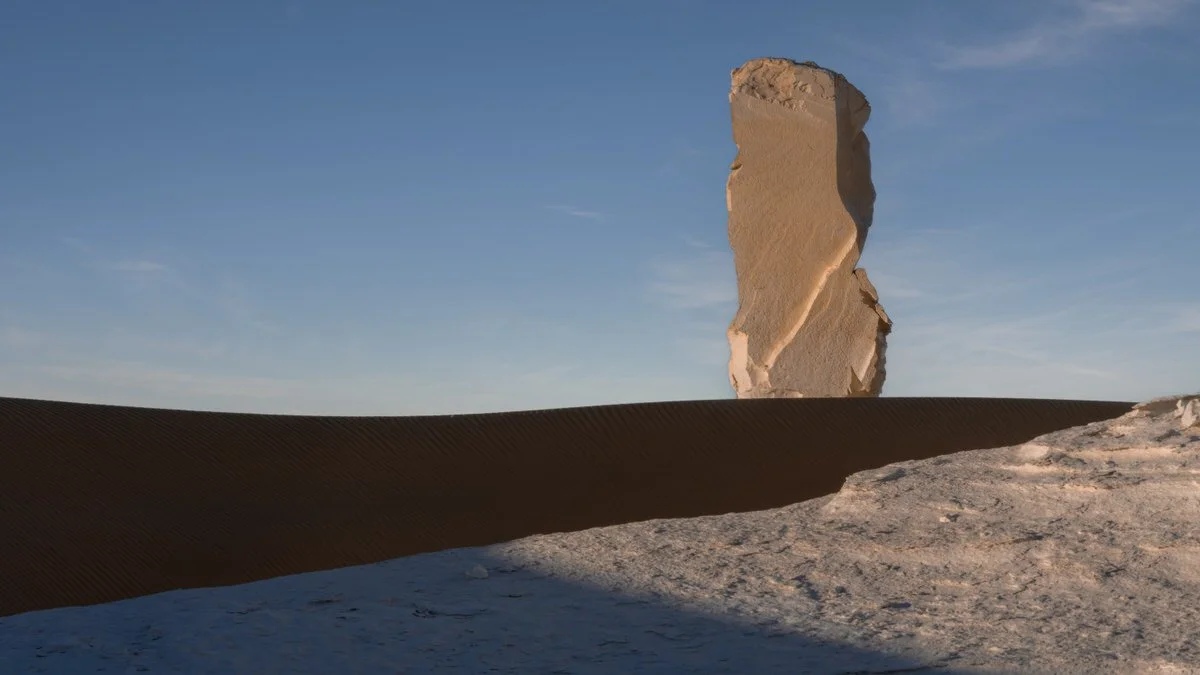
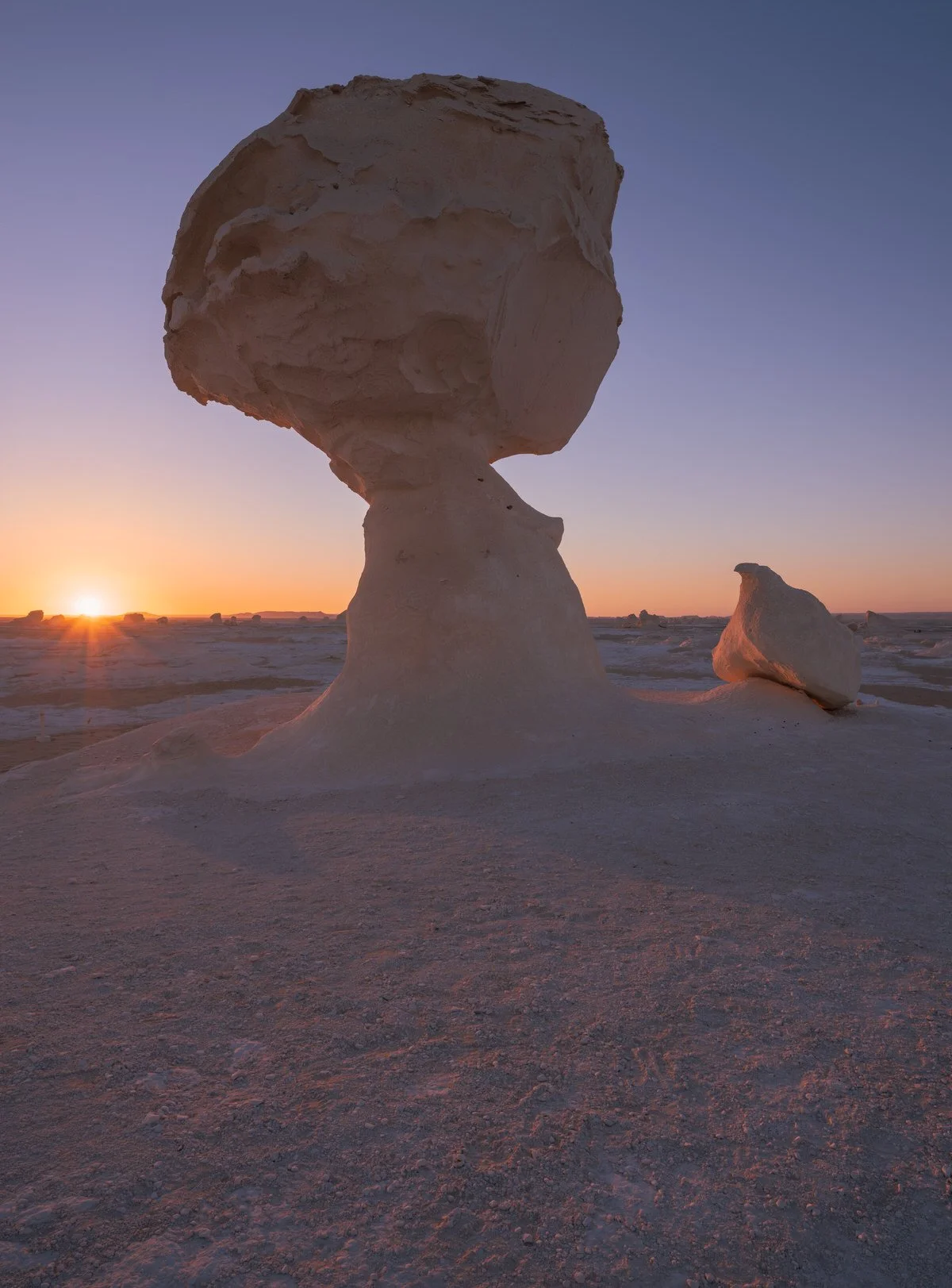
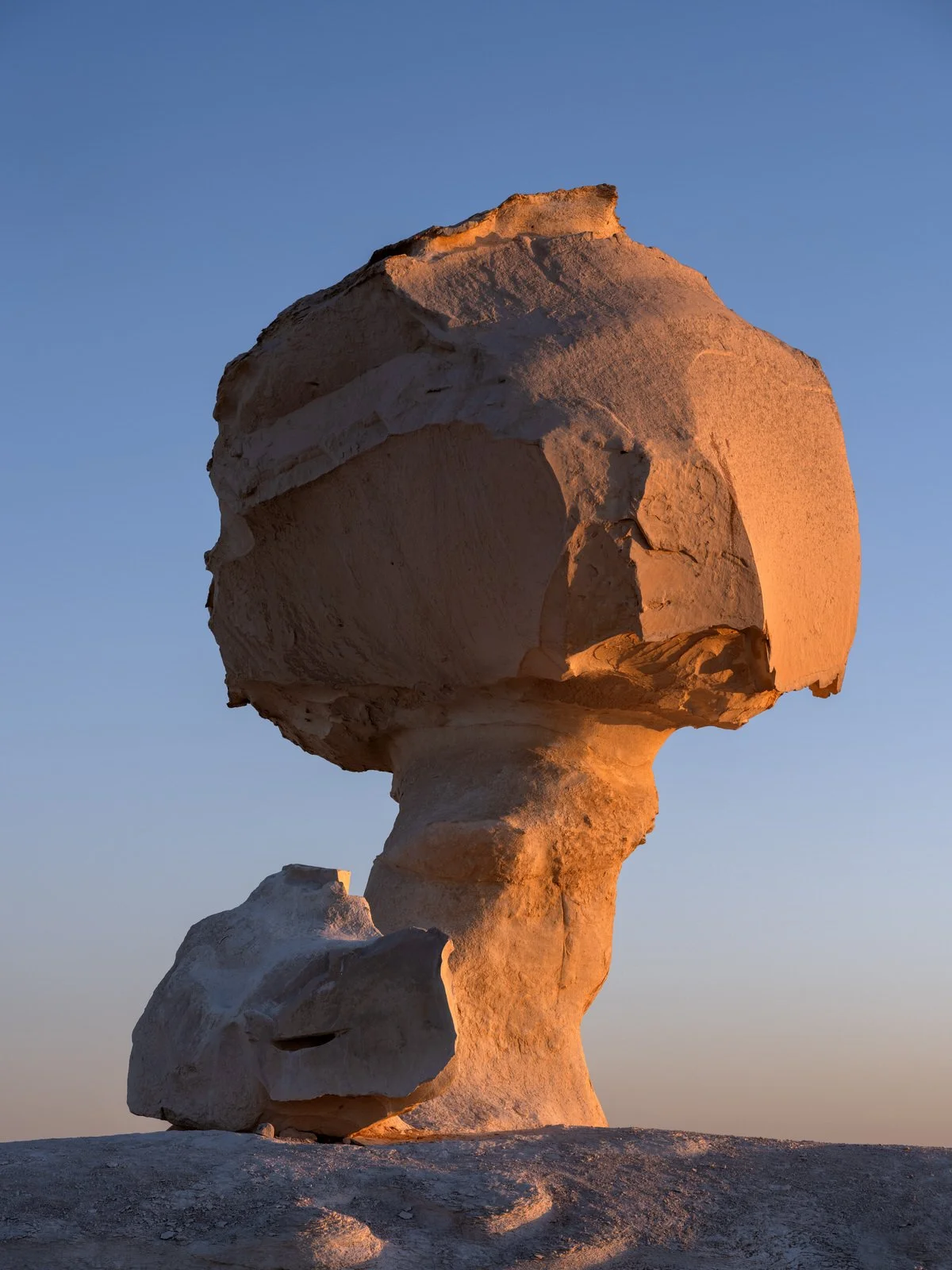
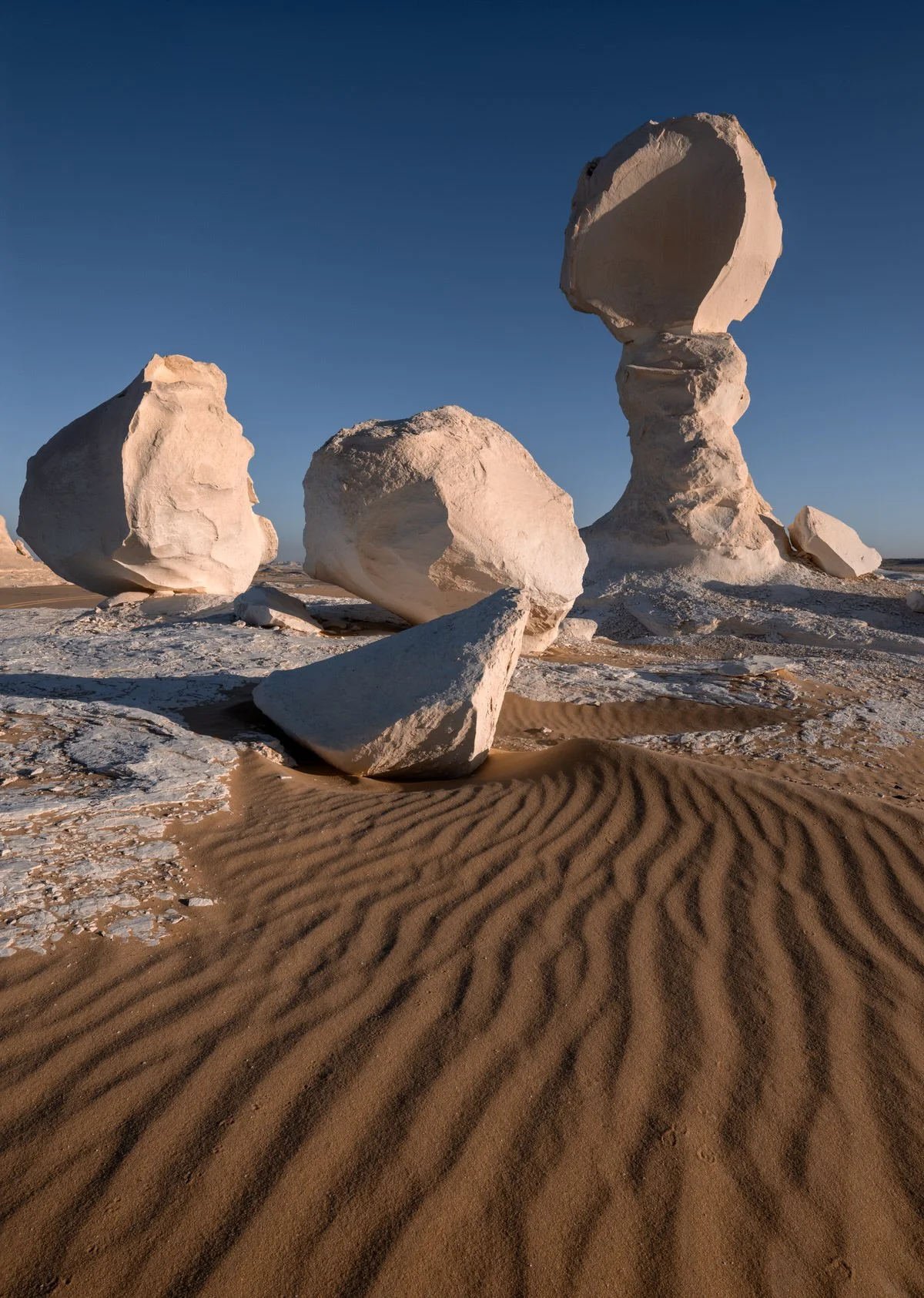
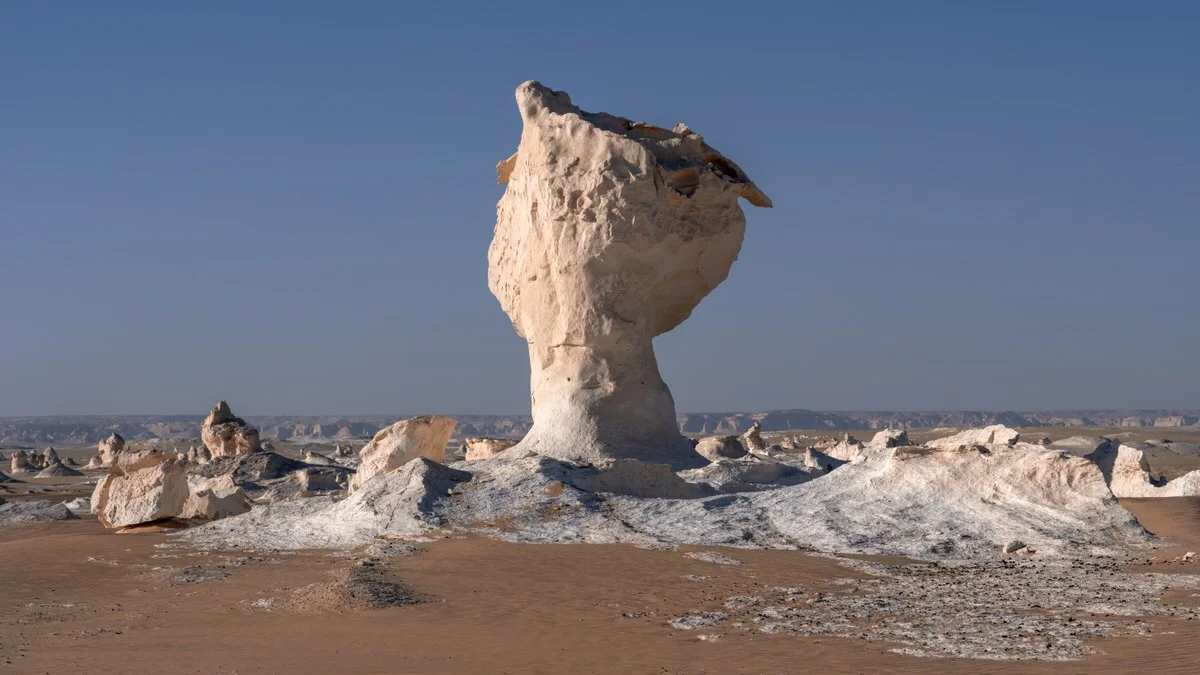
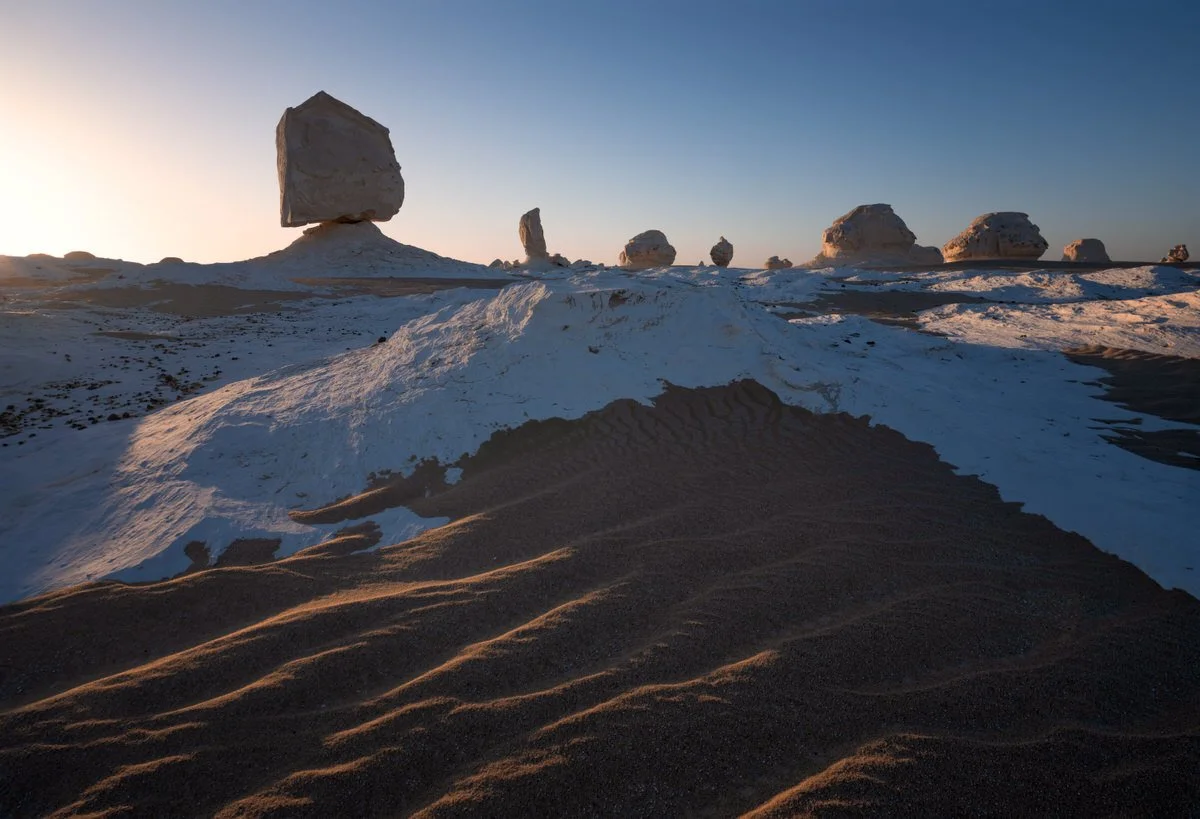
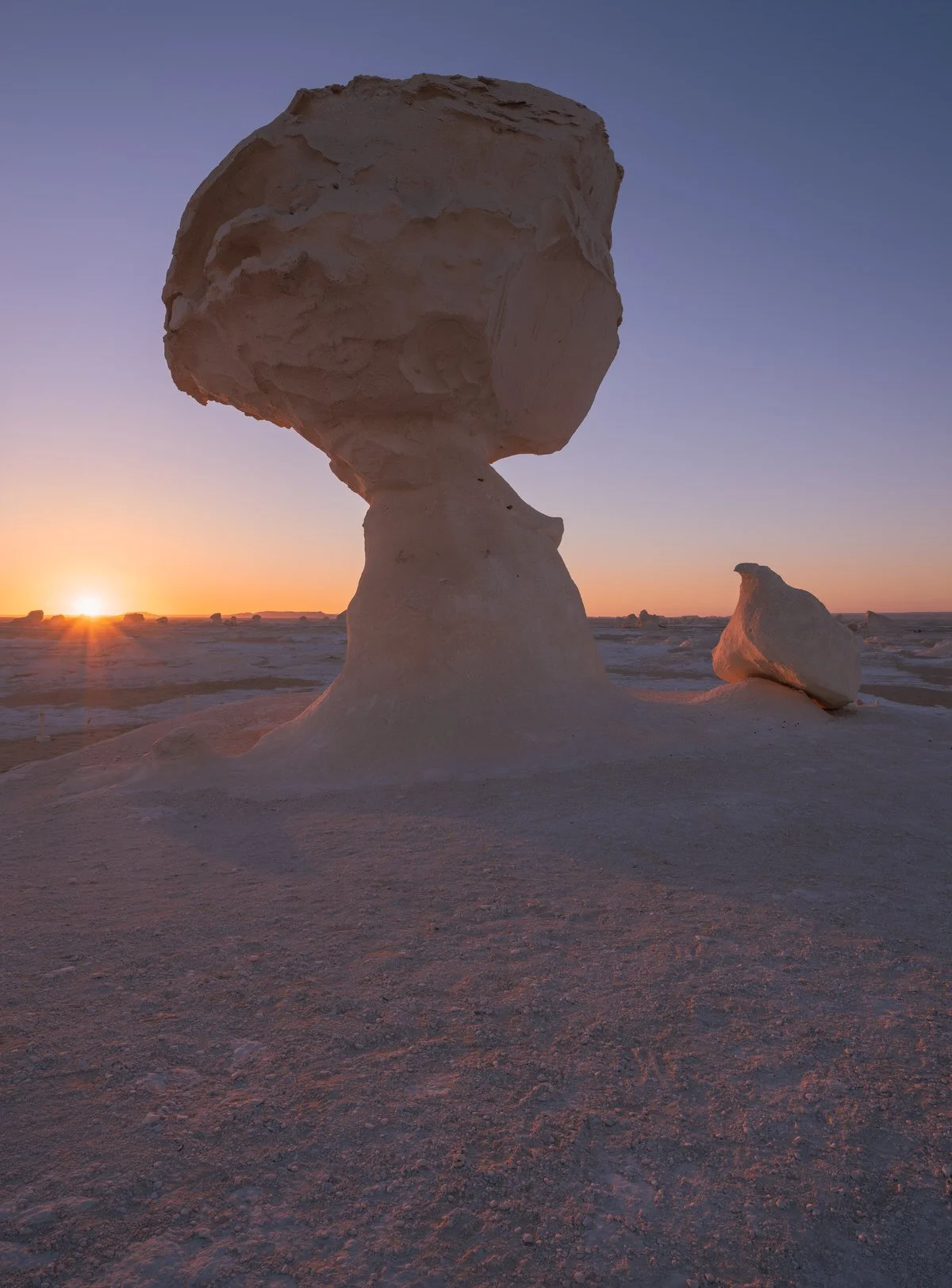
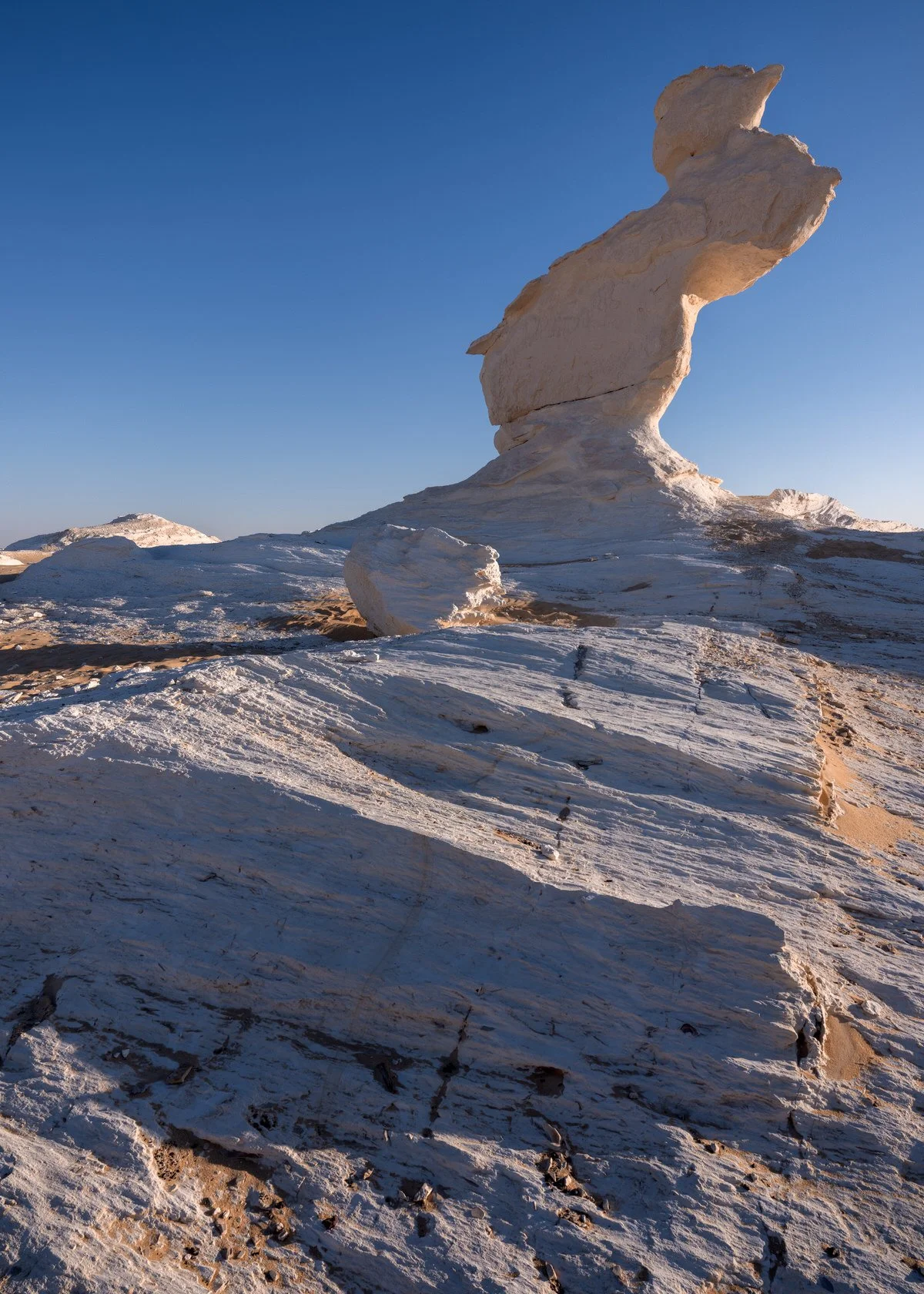
The White Desert’s most distinctive feature is the variety of its chalk formations. Some resemble giant mushrooms, with broad tops on narrow stems. Others suggest tents, towers, animals or abstract sculptures. The famous “chicken and mushroom” is the best-known example, but there are countless less familiar shapes waiting to be noticed.
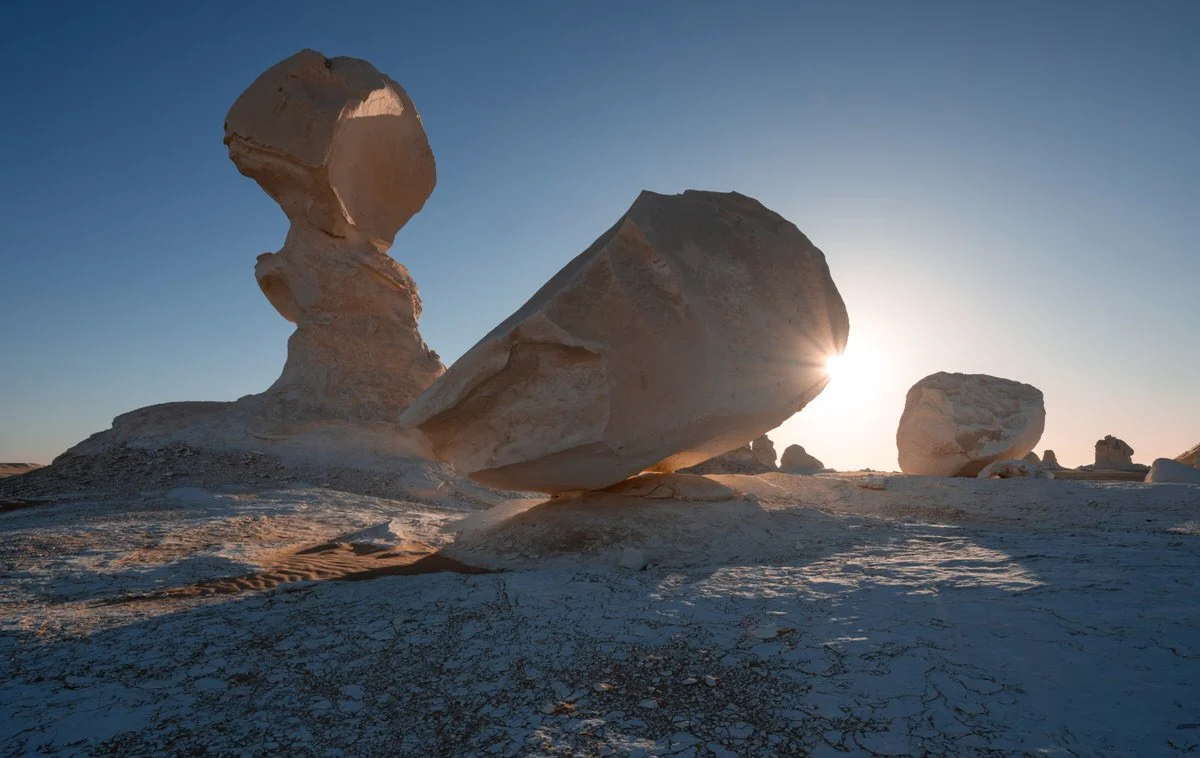
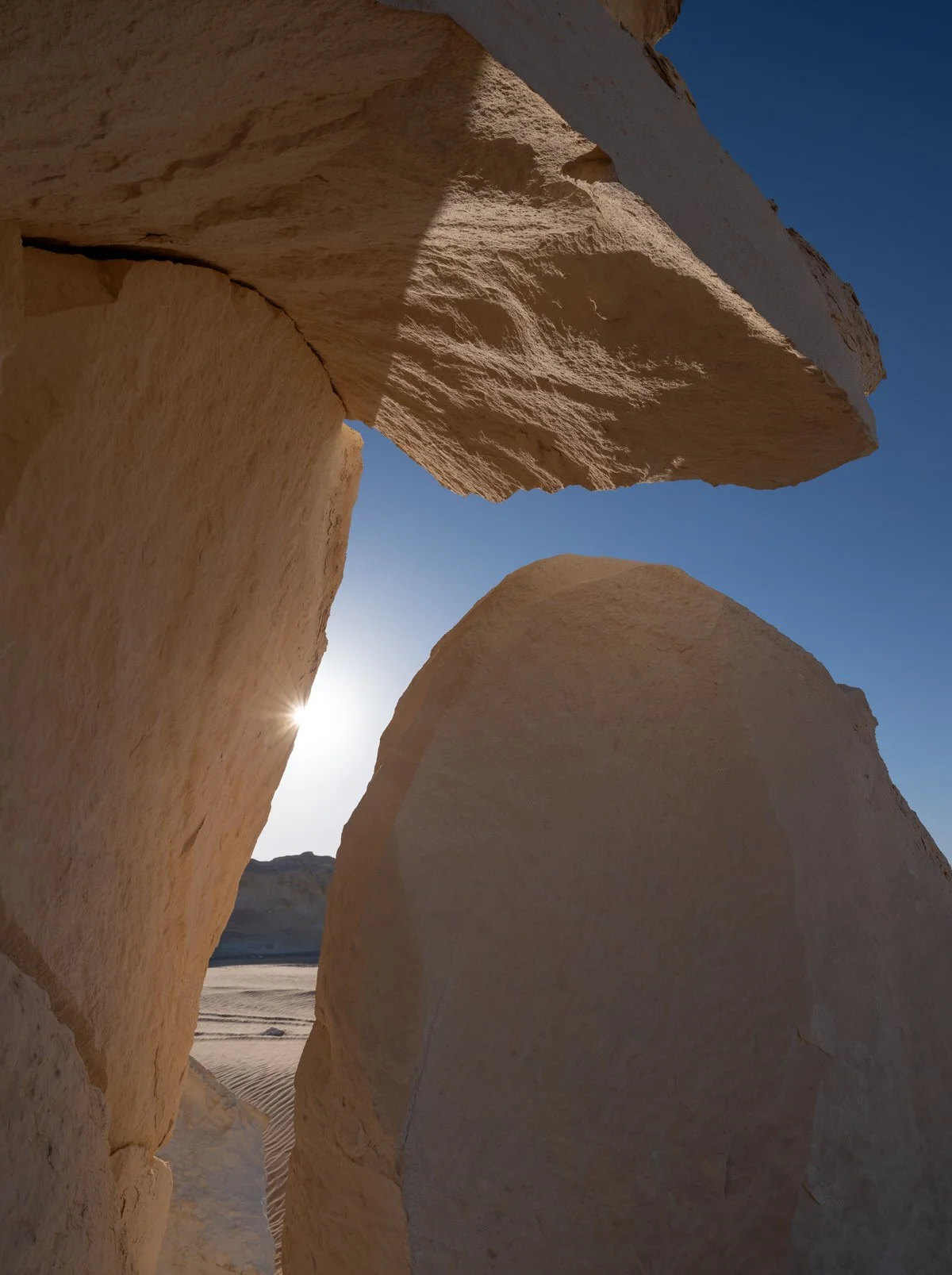
For a landscape photographer, the best part is that these shapes are never fixed. A formation changes completely with a few steps to one side. What looked solid may reveal an opening, and a rock that disappeared against a busy background can become a clean silhouette against the sky. I rarely commit to the first angle. I walk around a subject, crouch, move left and right, and watch how the lines inside the frame rearrange themselves.
Finding a subject is only the start. The real decisions come next: where to stand, how much space to leave around it, and whether the formation should be an isolated form or part of the wider desert. Some of my favorite compositions are very simple, one formation and a quiet background. Others depend on the relationships between several shapes, or on a foreground curve that leads the eye into the distance. Here, patience pays off more than constant movement.
Light is the real subject
Chalk is a gift and a challenge for a photographer. It responds beautifully to changing light, but it is also very bright, so I watch the highlights closely. Around sunrise and in the golden hour it takes on soft pink and warm gold tones. As the sun climbs, those colors fade and the formations turn brighter and more graphic. Later, longer shadows begin to define the shapes again.
What fascinates me most is how the same subject changes while nothing moves but the light. A small ridge appears. A hollow falls into shadow. The edge of a formation separates from its background, giving the composition the clarity it lacked an hour earlier. Low side light is what makes the texture readable, which is why I plan my days around the golden hour.
Harsh midday sun is a different story. It flattens some textures and creates strong contrast between lit surfaces and deep shadows. I don’t force photographs then. I use midday to scout, study angles, and mark subjects to return to when the light softens.
In the White Desert, waiting is part of the work. I might find a formation with potential, then watch how the shadows move across it, and sometimes the strongest image comes from staying put and letting the scene arrive. That slower approach is one of the reasons I keep returning. It brings me back to the fundamentals: light, form, texture and composition.
Tracks, silence and negative space
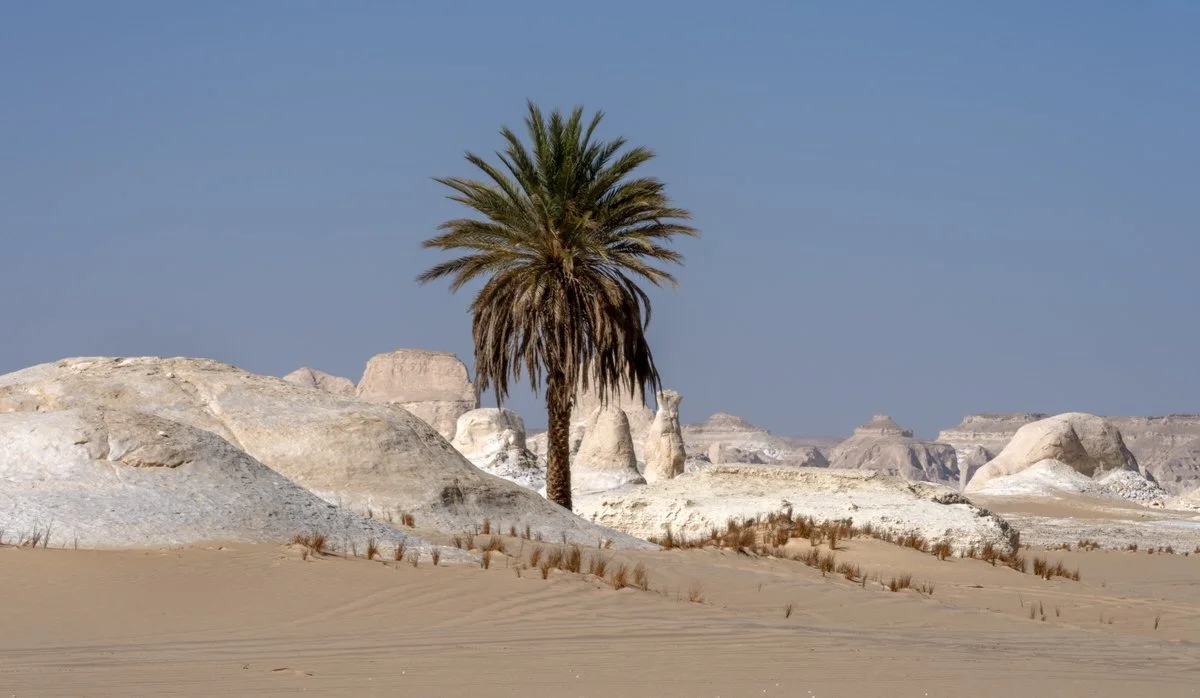
At first glance the White Desert can seem empty. There is little vegetation, and the open space gives the impression that little could survive here. Yet the region supports animals adapted to this demanding environment, including fennec foxes, sand cats and gazelles.
Seeing them is another matter. Many are elusive and more active in the cooler hours or after dark. Their presence is often announced only by tracks in the sand, which, for a photographer, are a quiet reminder that the landscape is more alive than it looks.
That emptiness is also a creative tool. Open sand and quiet space around a formation give a composition room to breathe, and the silence helps me slow down enough to notice smaller details: marks on the ground, changes in the rock’s surface, subtle differences from one stretch of terrain to the next. The formations get most of the attention, but the wildlife, silence and open space are all part of what makes the place special.
Sculptures of the White Desert
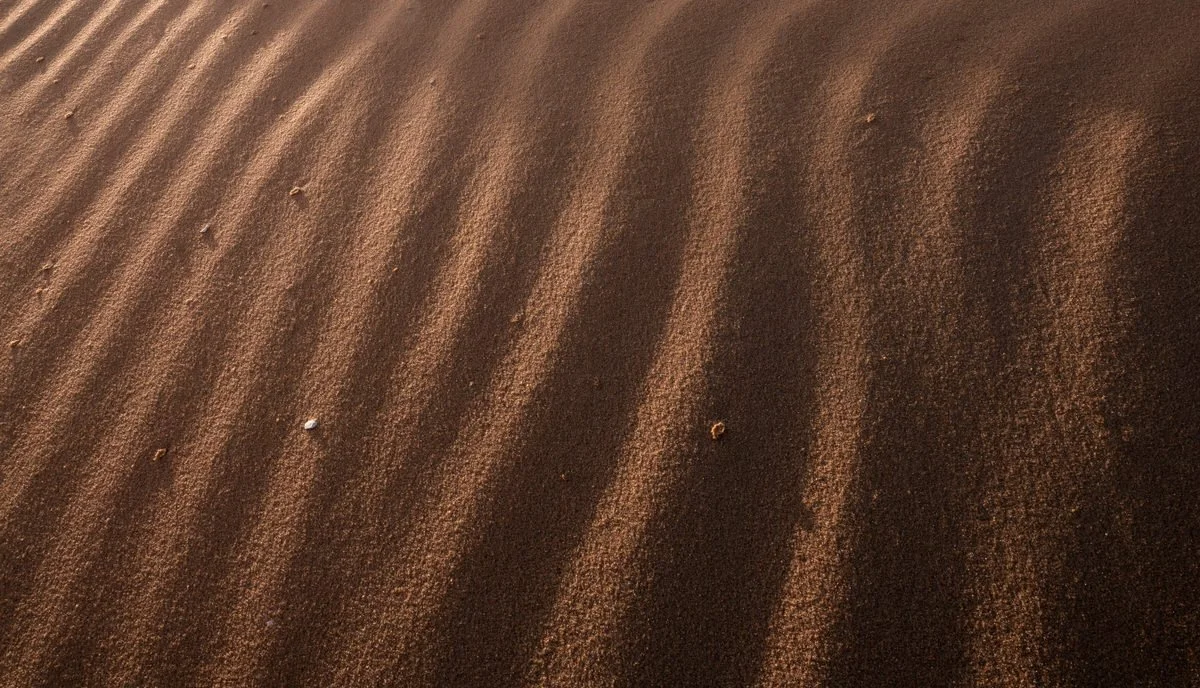
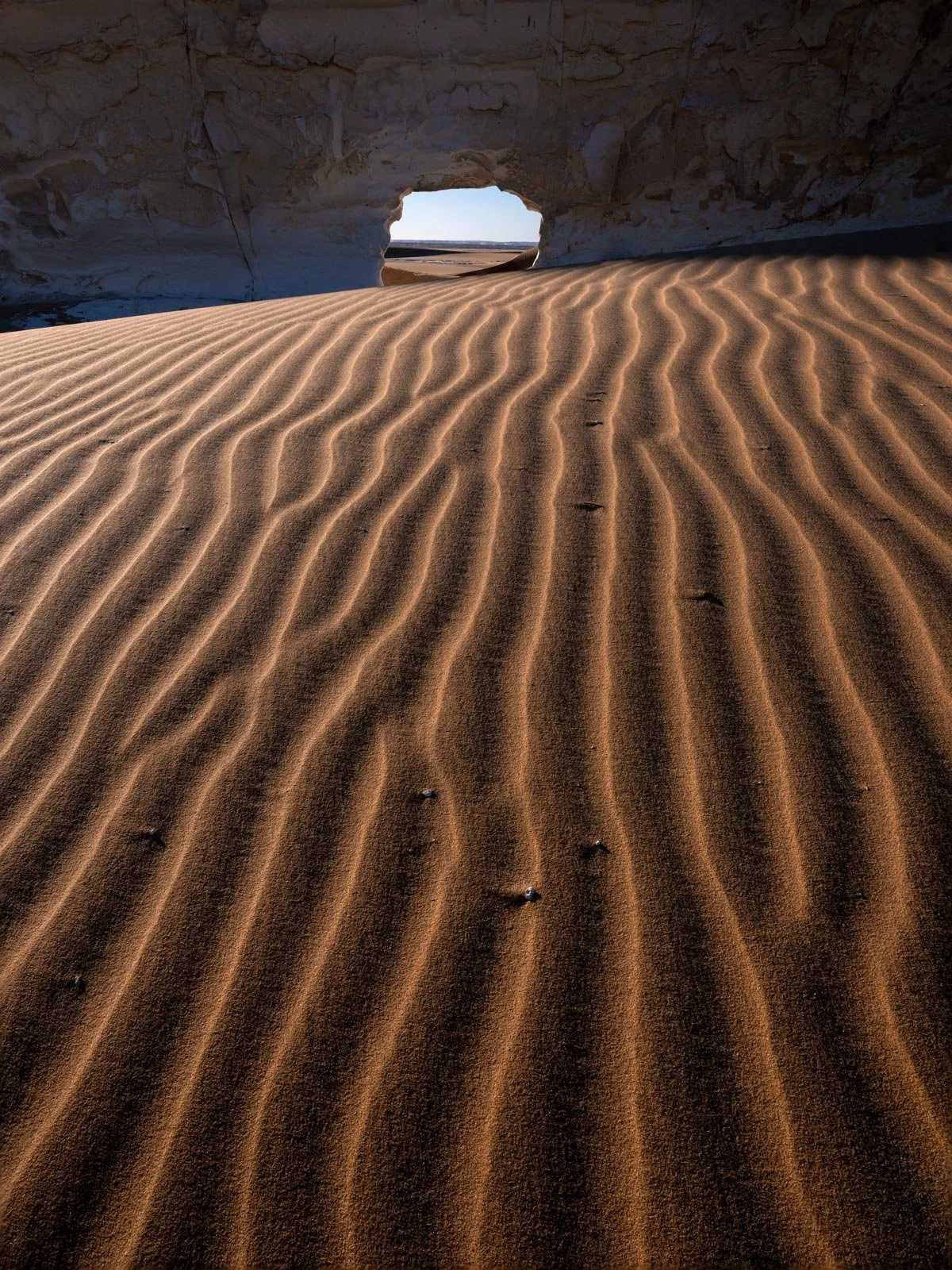
Rhythms of the Sand
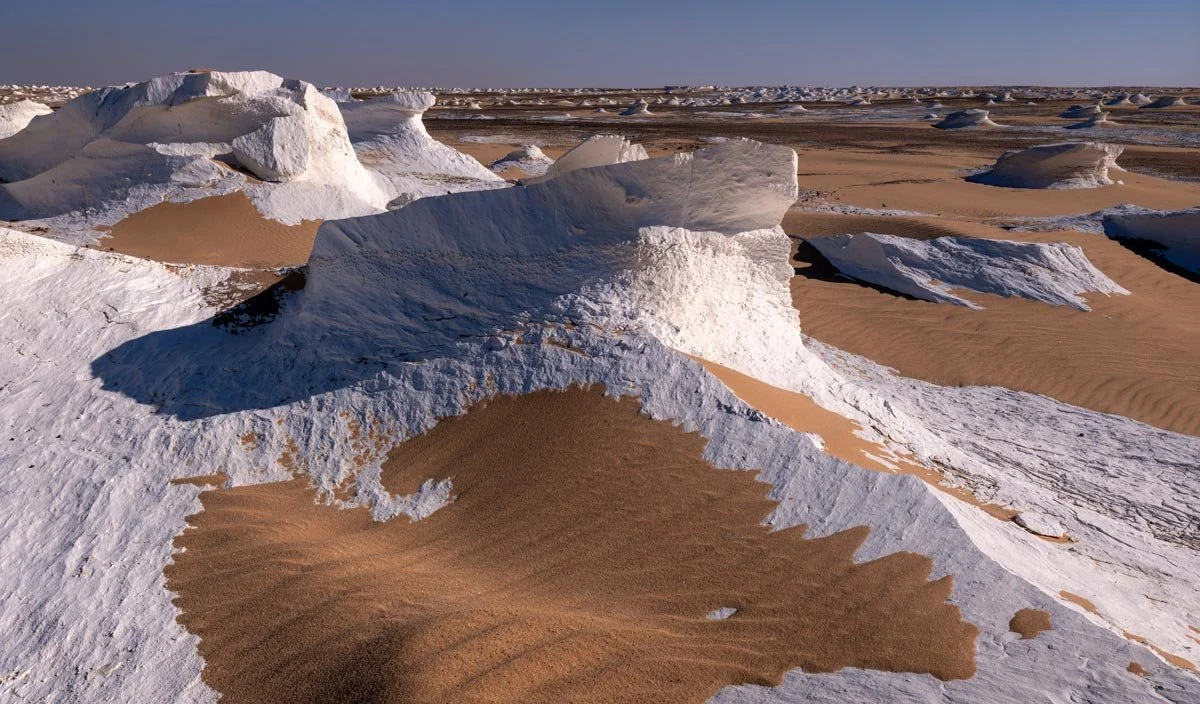
Carved by the Wind
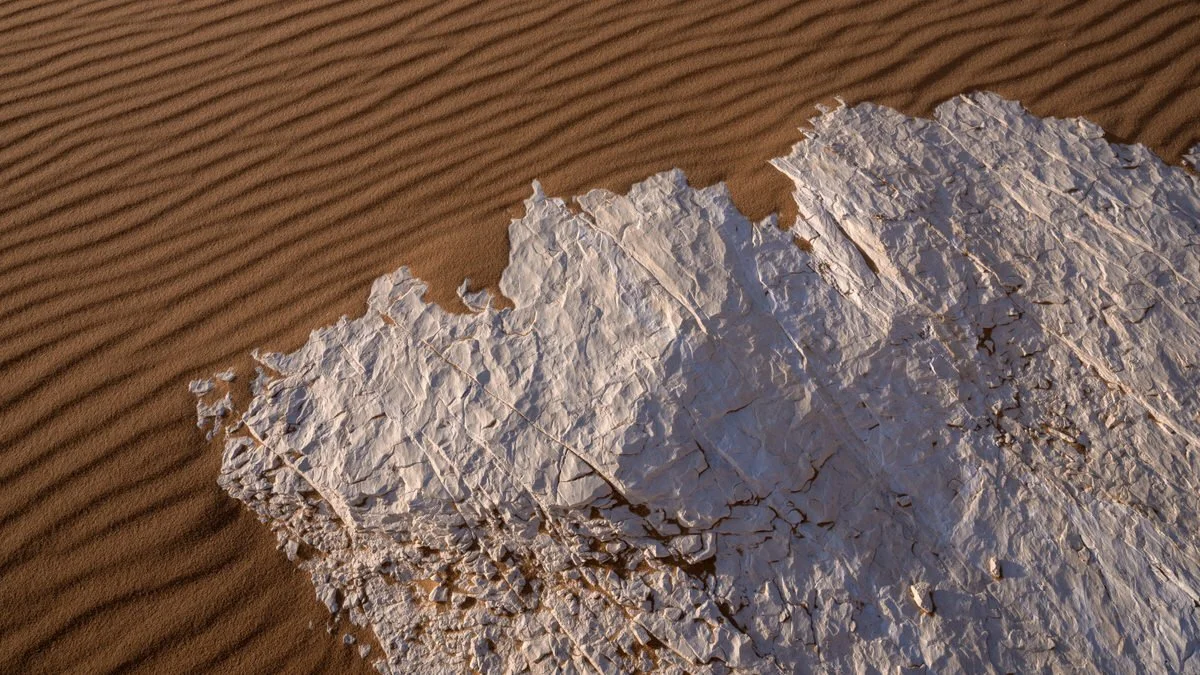
Where Chalk Meets Sand
The camp experience
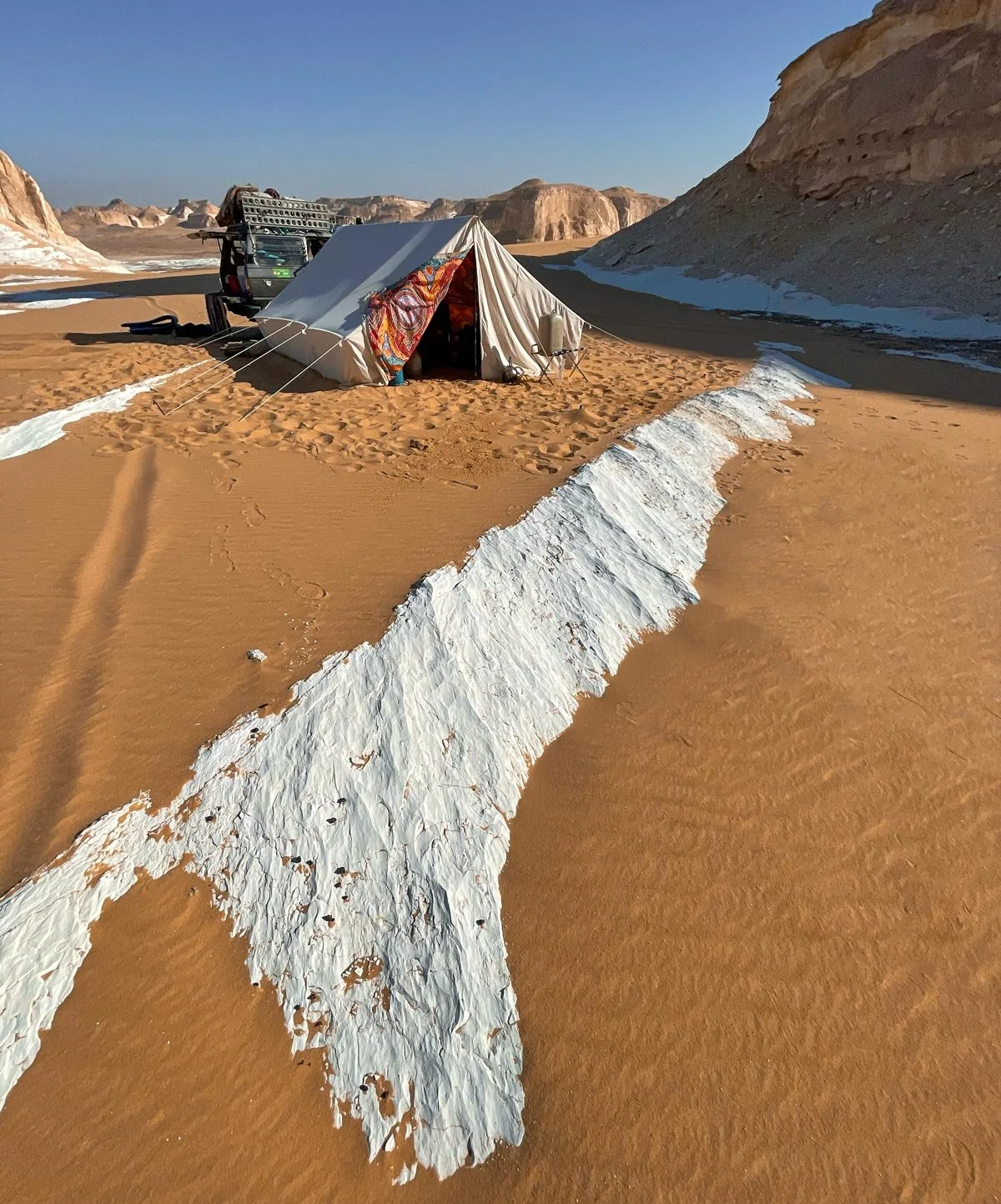
Camping is where the White Desert truly comes alive. After sunset, we light the fire, the temperature drops, and the sky fills with stars. With almost no light pollution, the night sky is extraordinary. Winter nights can be surprisingly cold, making the warmth of the campfire even more welcome. October to April is generally the best time to visit, with comfortable days for exploring.
There is nothing fancy about our camp, just a simple tent, good food, and wonderful Egyptian hospitality from my friend and guide, Ahmad, and his team. Our days revolve around reaching the photography locations I have planned, being there for the right light, and enjoying our time together.
Ahmad, more than a guide
Over the years, Ahmad has become much more than my guide. A Bedouin with a deep knowledge of the desert, he is kind, full of energy, and generous with his hospitality. He introduced me to his family and welcomed me into his world, and I have come to consider him a brother. His warmth is a big part of what makes every return to the White Desert feel so special.
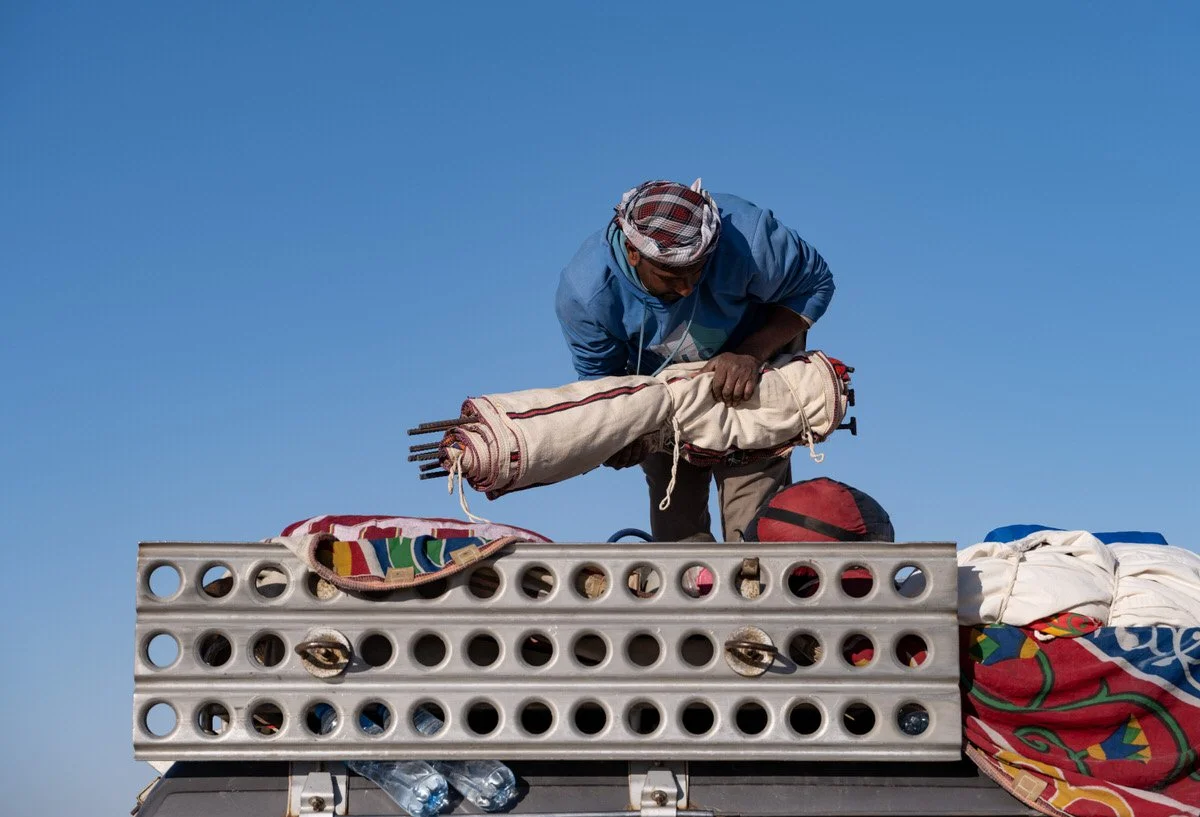
Photography Equipment
Ready to Capture the White Desert
In Search of Desert Light
Fujifilm Gear, Protected by f-stop
Framing the White Desert
As a Fujifilm X Ambassador, I always shoot with the GFX system. On this trip I decided to carry limited gear. Weight matters on a six-day trip, but so does image quality, so I chose one GFX body and only two lenses: a wide angle and a medium telephoto. Together they cover everything from close, foreground-driven frames to compressed details and abstracts, without carrying anything extra.
Curious about the equipment behind my photographs? Visit My Gear to explore the cameras, lenses and accessories I use on my photography journeys.
Fujifilm GFX 100 II
The large sensor suits this subject. Chalk is tricky, with bright whites and delicate tonal shifts, and medium format's dynamic range and detail hold the texture of every erosion groove and fossil-studded surface. Files also stand up to big prints.
Fujinon GF 20-35mm
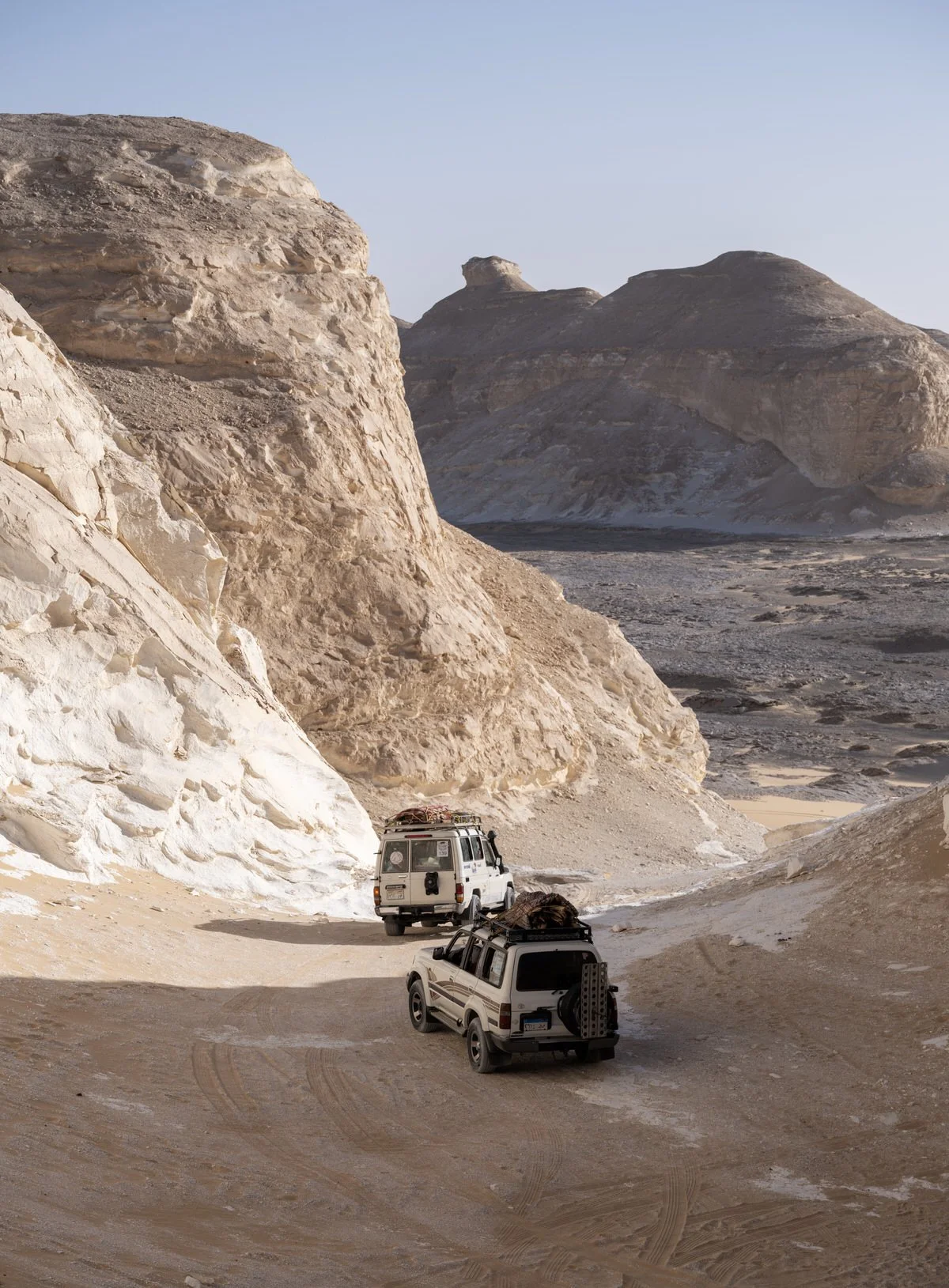
My main lens for foreground-driven compositions. Going wide and close to a formation, with more shapes layered behind it, exaggerates scale and depth. It was also the natural choice in Agabat, where steep banded walls fill the frame.
Fujinon GF 45-100mm
For isolating details and compressing distance. In the White Desert it picked out patterns in the rock and stacked distant formations into abstract layers. In Agabat it let me pull out colored bands of stone without climbing the walls.
Gitzo Systematic tripod
A rigid carbon fiber platform. Desert wind is constant and a medium format sensor shows any vibration, so stability was non-negotiable, especially for long exposures at blue hour and during low light photography.
RRS BH-55 ball head
Smooth, precise and strong enough to lock a heavy GFX setup without drifting, which matters when fine-tuning a low foreground composition.
F-Stop Tilopa backpack
It carried everything through six days of dust and bumpy tracks, keeping lenses protected and quick to reach at the Land Cruiser's tailgate or when a sunrise gave me only minutes to set up.
The Silent Sentinel
Life Among the White Rocks
My approach: the landscape as a story
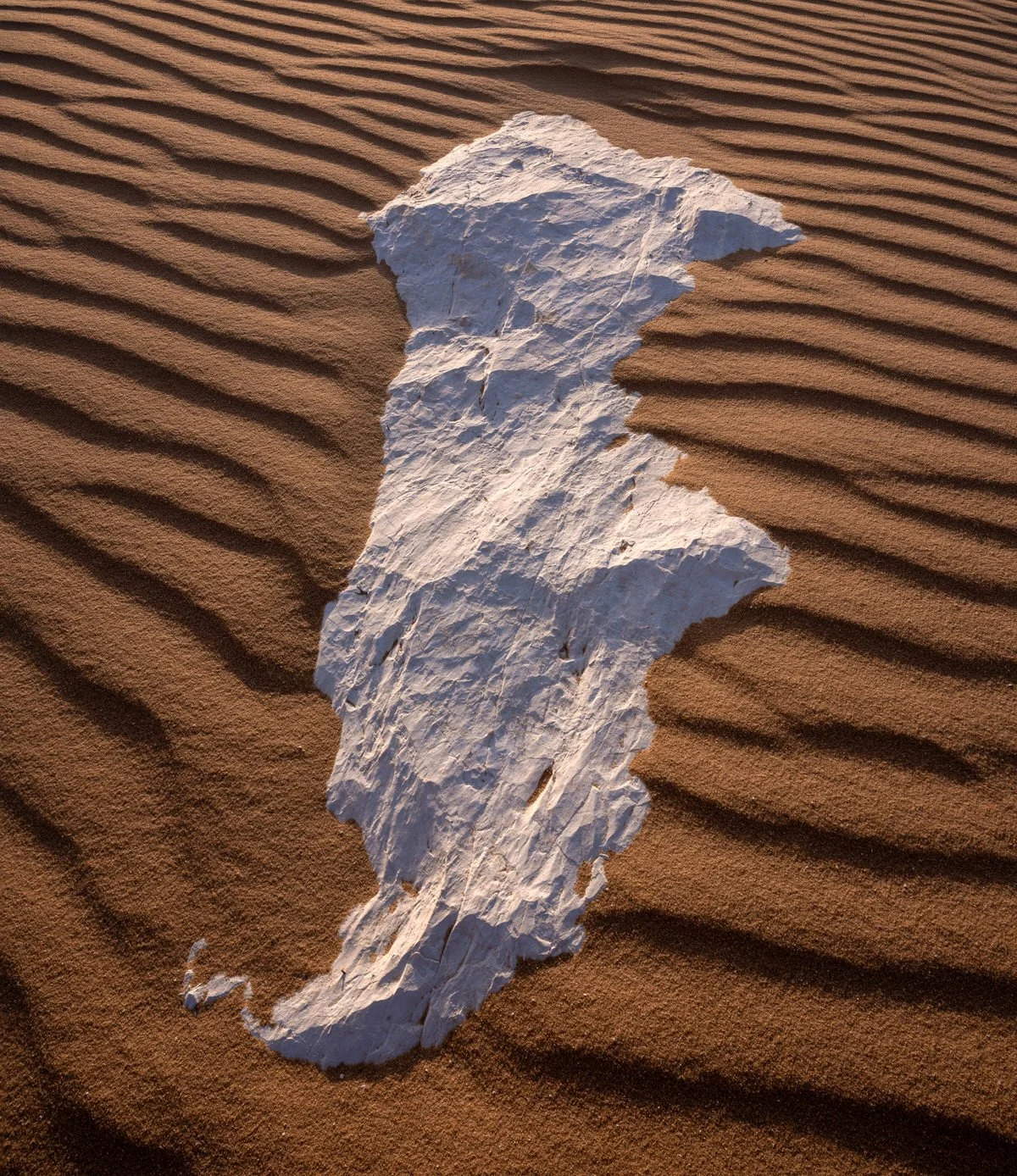
I didn't want one big postcard of the White Desert. I wanted to tell the story of the landscape element by element: the wide rock formations, the textures of the chalk, the abstract patterns, the small details underfoot. Every element gets its own frame, and almost every frame is built around the foreground, because that is where the geology is closest and most tactile.
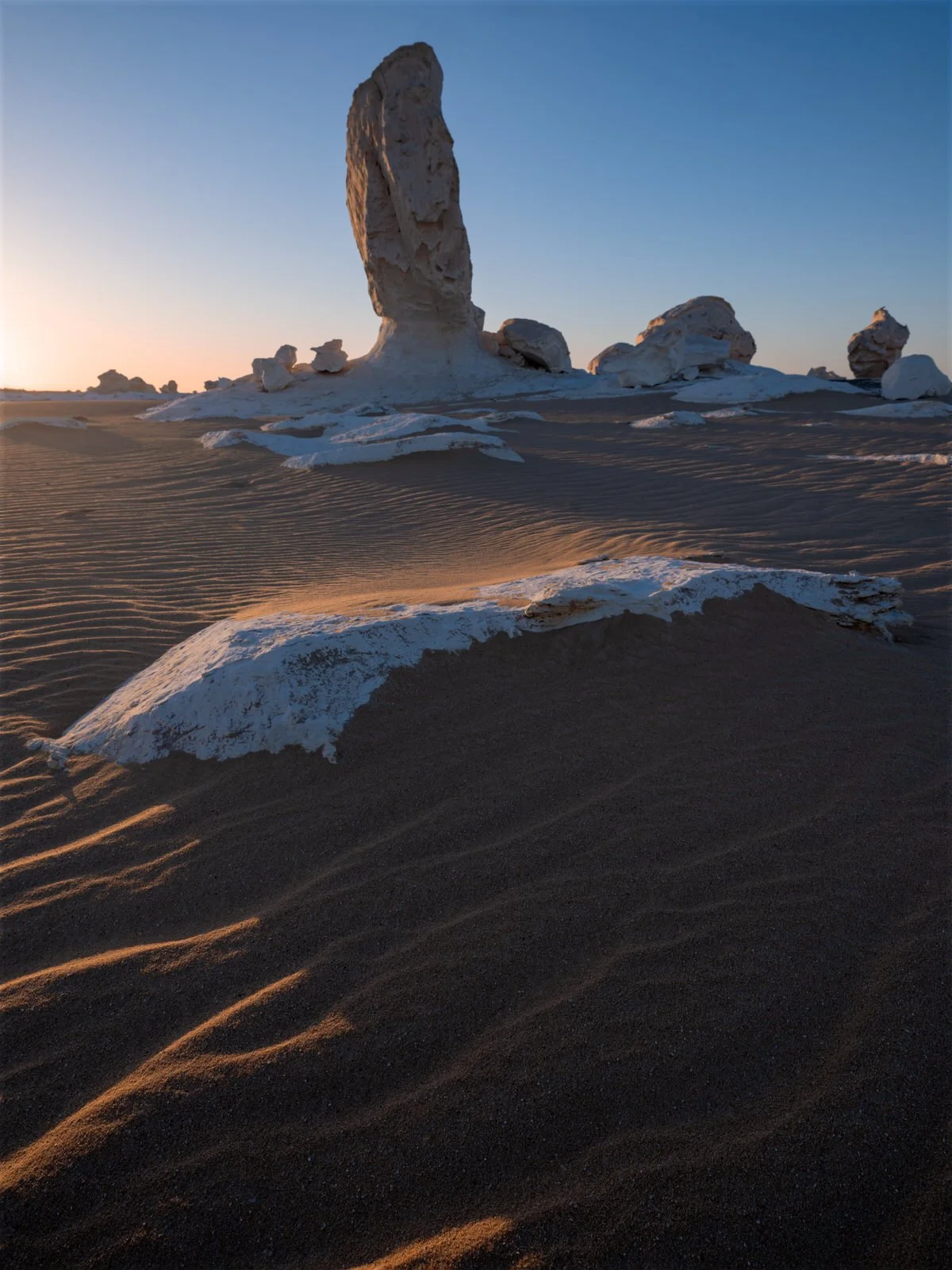
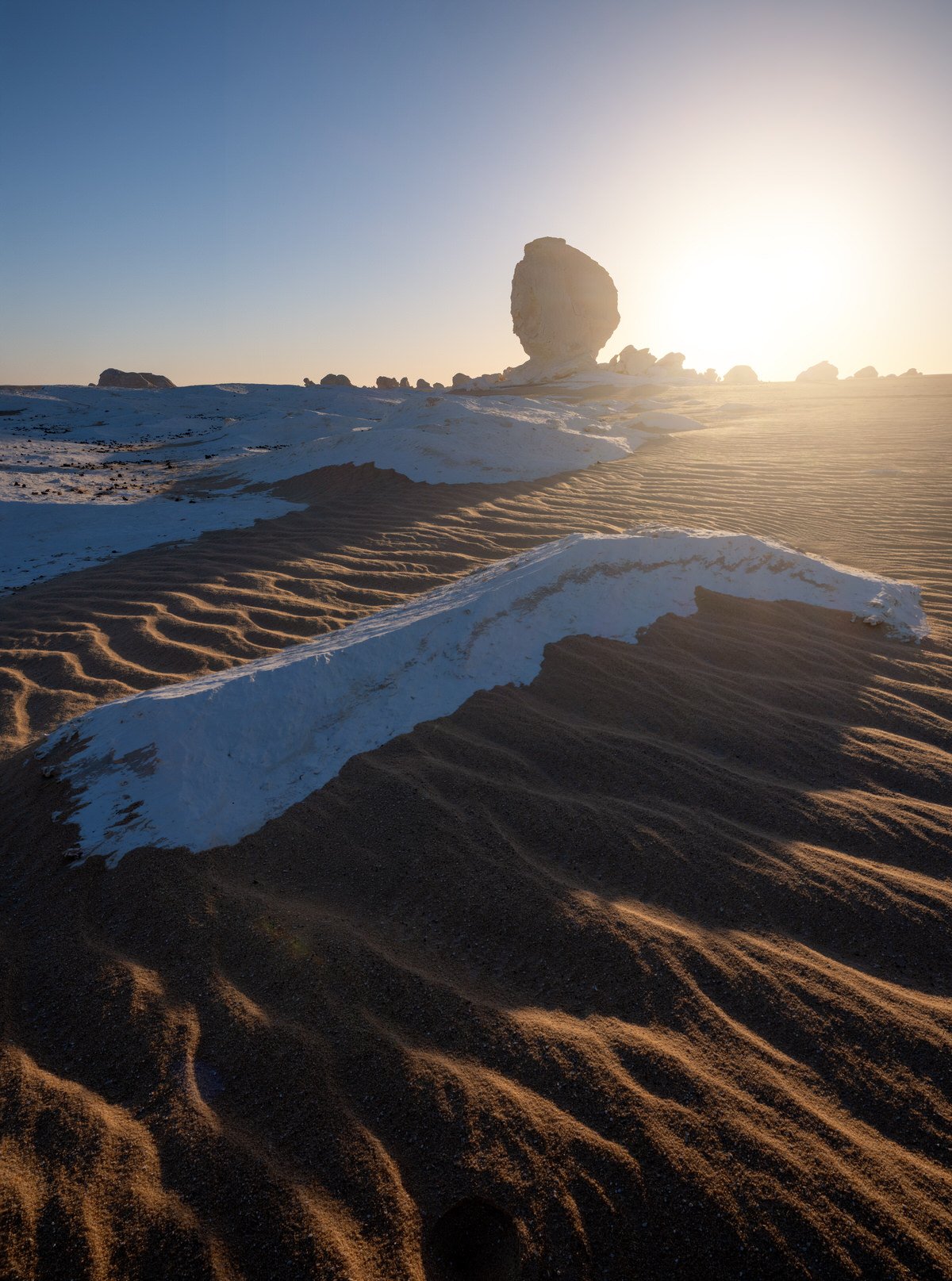
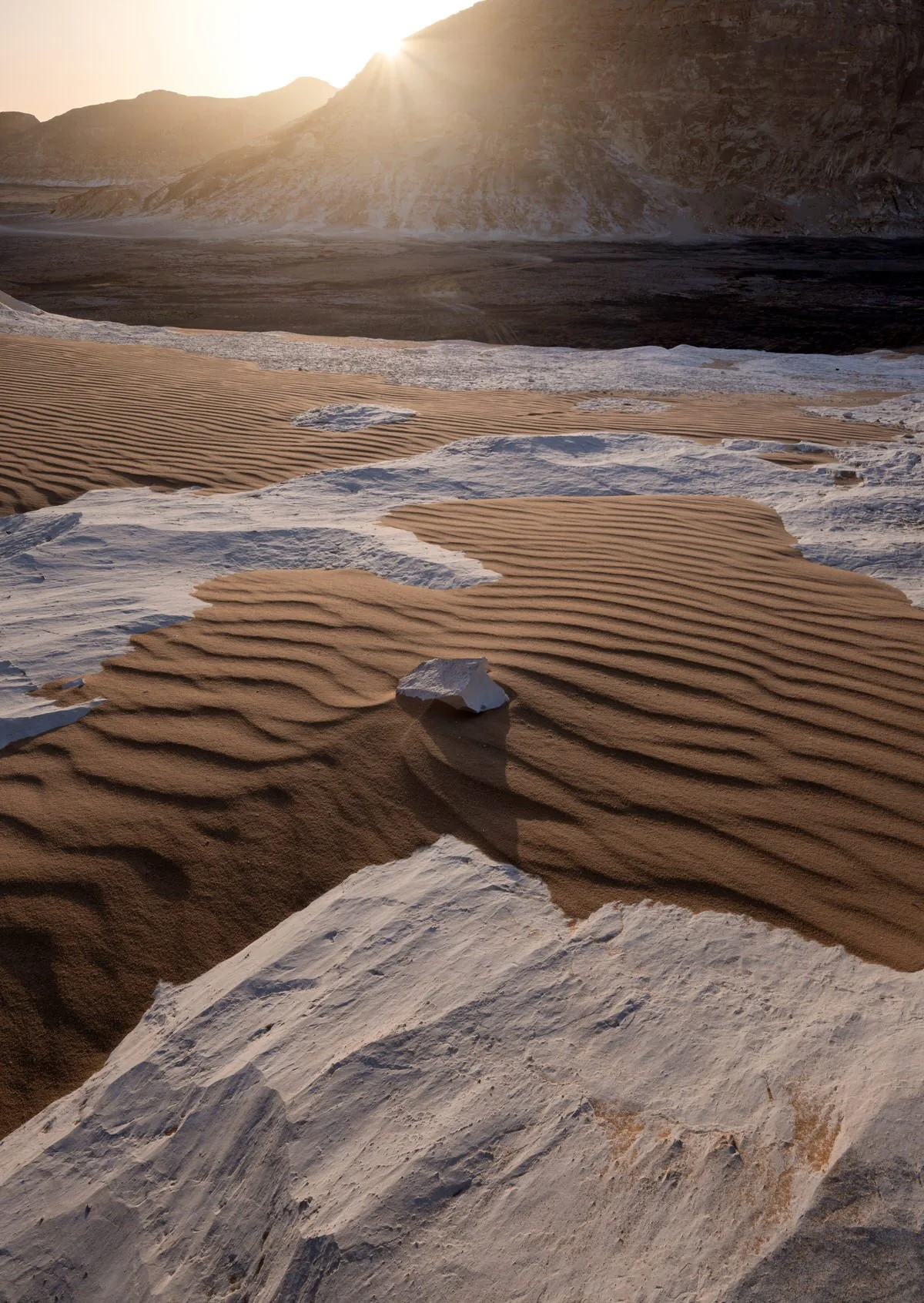
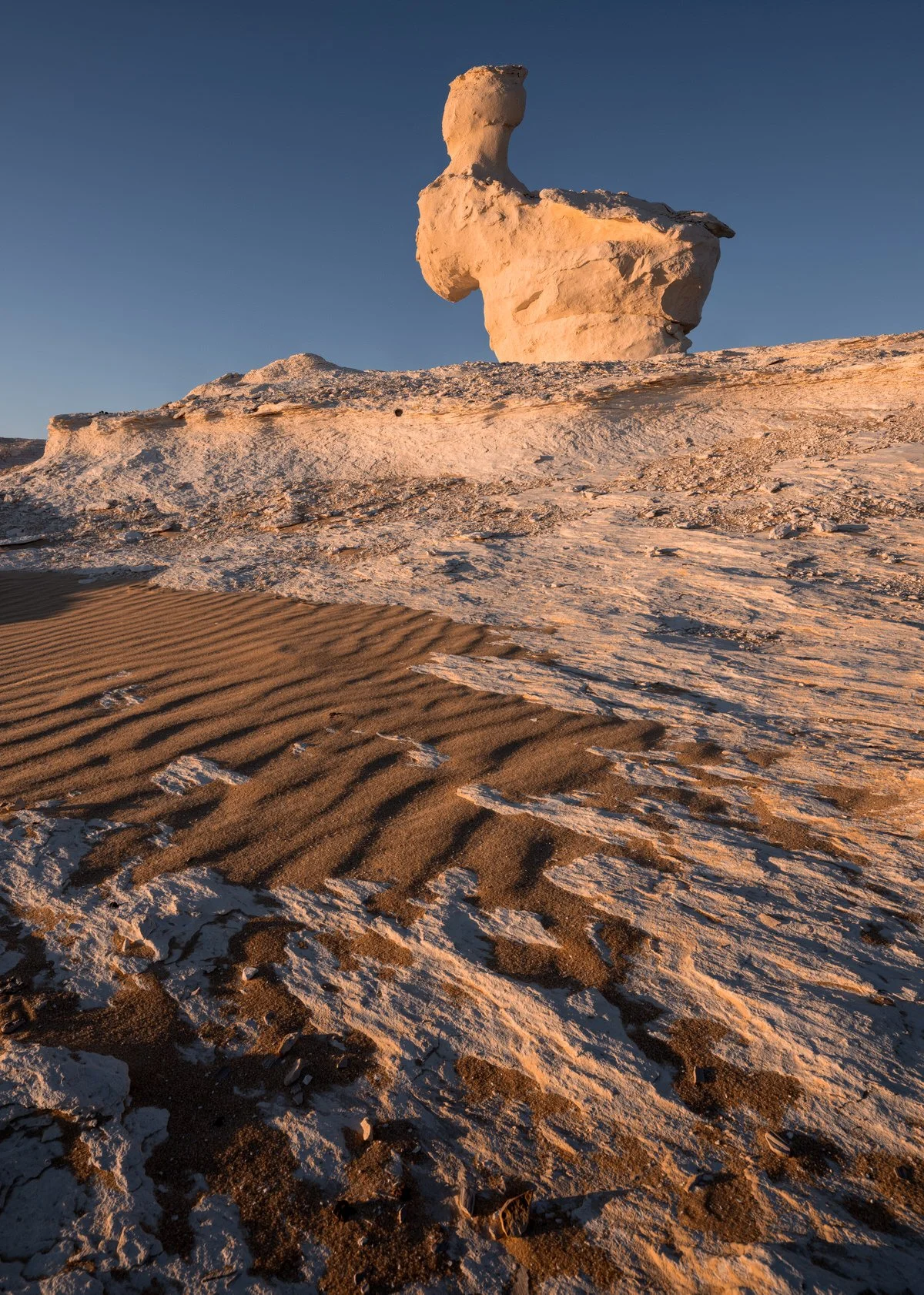
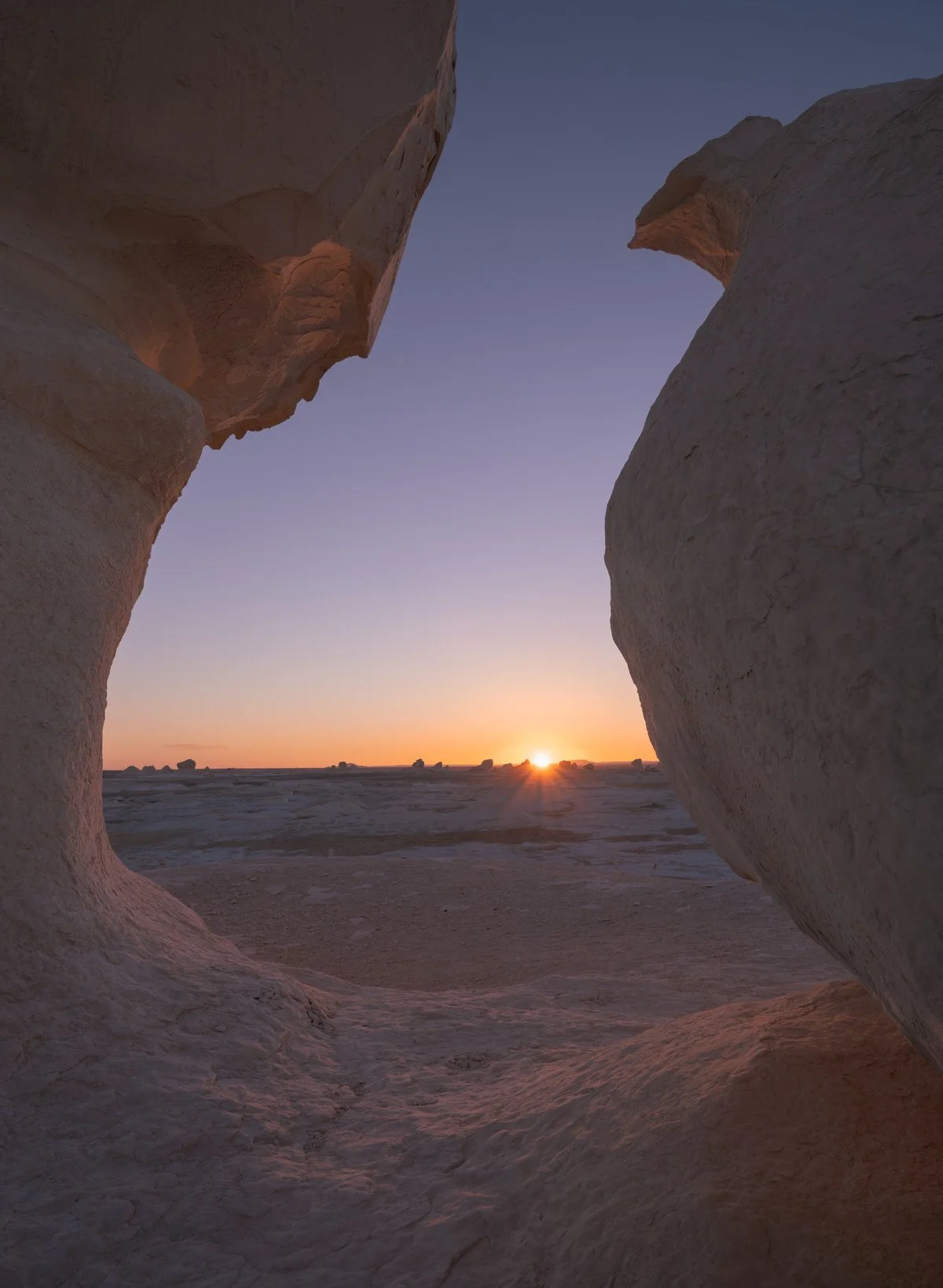
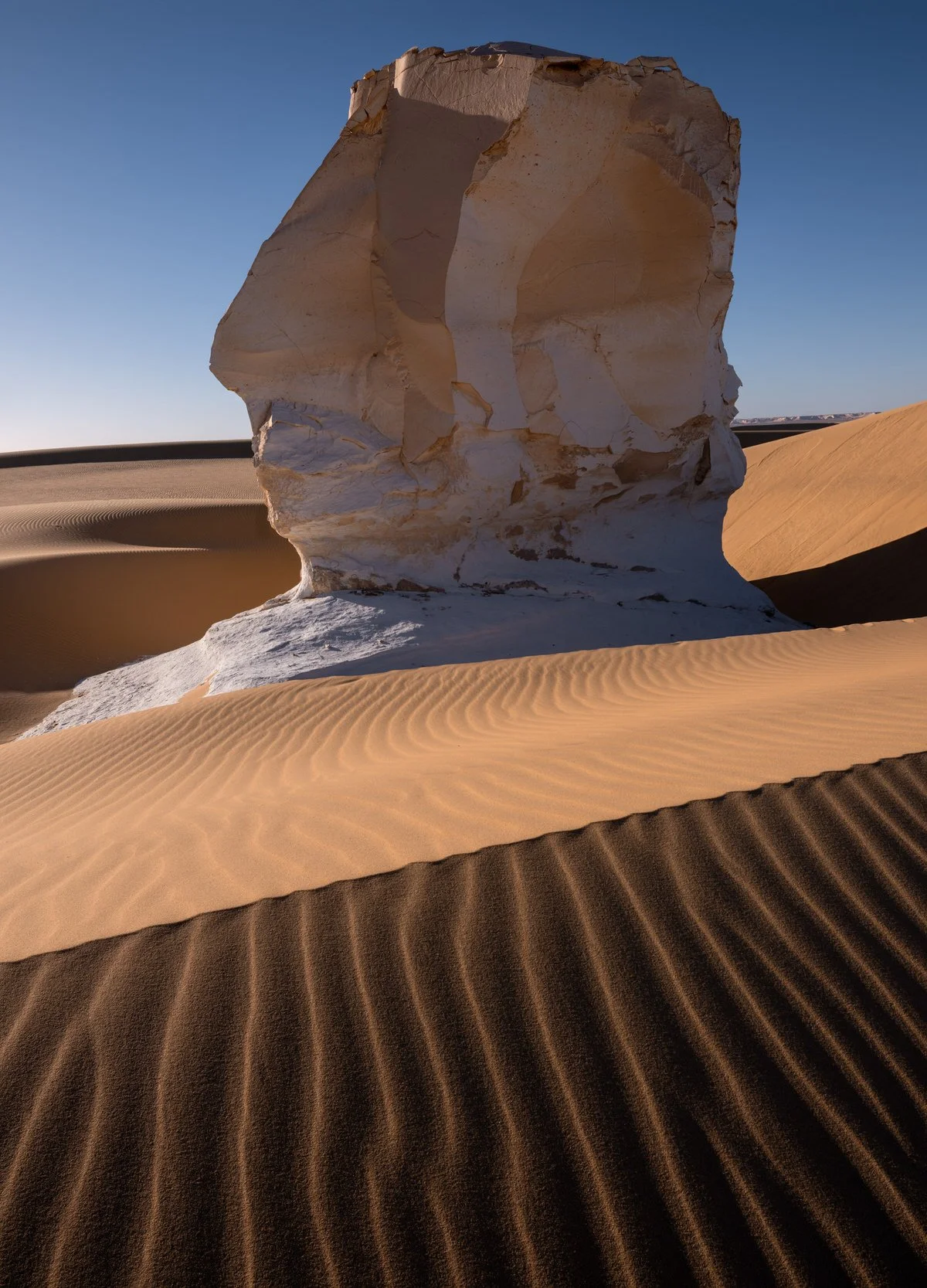
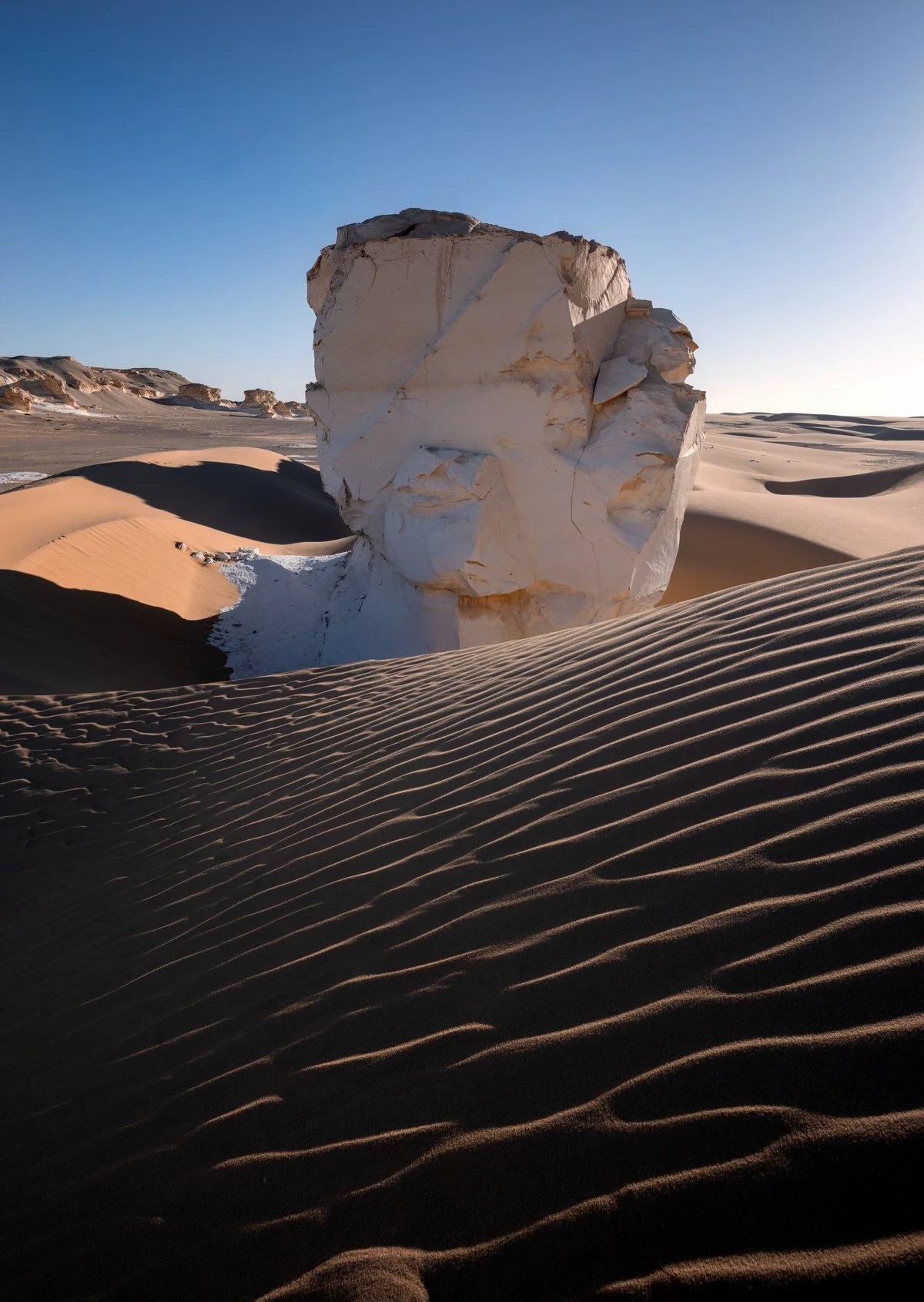
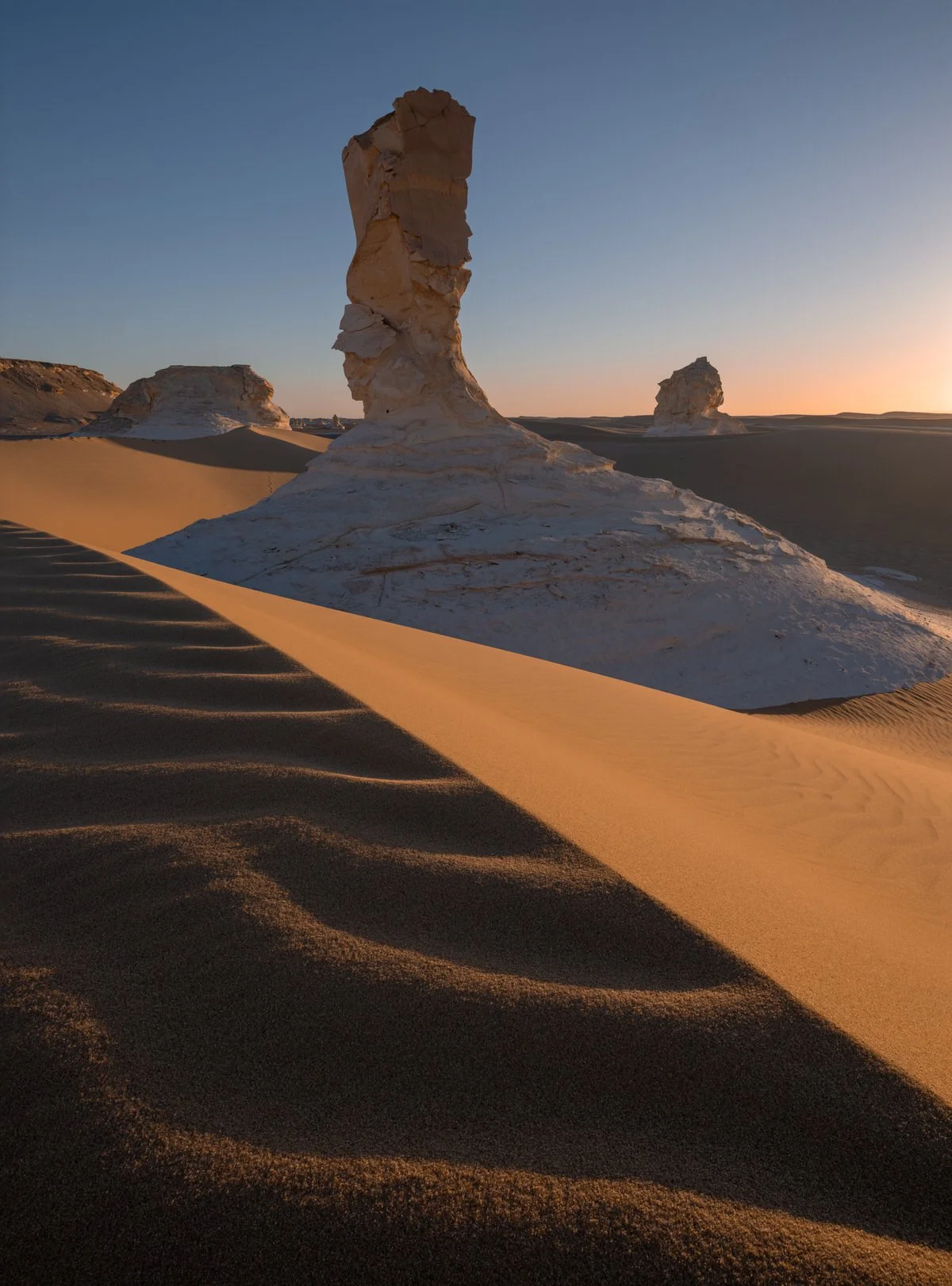
Most of my shots are vertical. A vertical frame lets me anchor the image with a sculpted rock or eroded surface at the bottom, then carry the eye up through the layers of formations to the sky, so the whole scene fits in one image without losing the foreground.
I also chose to shoot mostly at golden hour. The low, warm light rakes across the chalk, brings out every groove and ridge, and gives the desert its richest colors and contrast: white turning peach and pink against deep blue shadows.
Getting this close to the foreground, in both vertical and landscape frames, creates a depth of field problem: no single aperture keeps a rock inches from the lens and the formations behind it all sharp. So I used focus stacking, shooting several exposures focused at different distances and blending them into one image that is sharp from the nearest chalk surface to the horizon. On a tripod, with a medium format sensor that reveals every detail, it makes a big difference.
As for color treatment, I don't chase a dramatic sky. Clouds and colorful skies are nice, but my focus is the landscape itself, so I aim for a clear, sunny day at golden hour, with clean warm light on the rock and the sky left simple.
A Monument in the Sand
The Mushroom at sunset
Golden Hour Sculptures
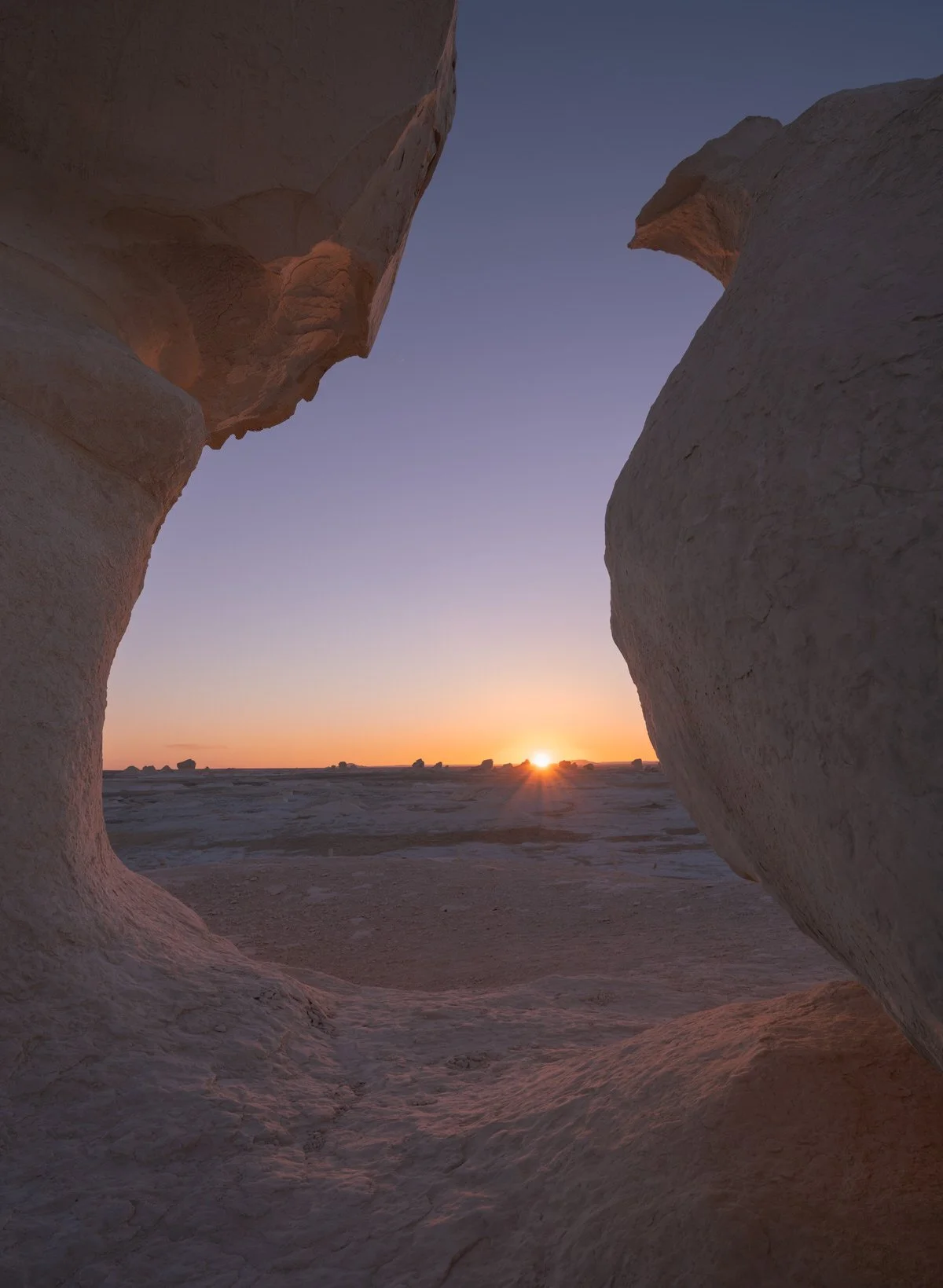
A Window to Desert Light
Photographing the shapes
Get low. Crouching beside a chalk formation makes it tower over the frame, with erosion lines and textures as the subject. The 20-35mm excels here.
Layer the depth. A close, interesting rock in front, with more formations fading behind it, gives a strong sense of scale.
Stack your focus. When the foreground is very close, shoot several frames focused from near to far on the tripod and blend them for front-to-back sharpness, in vertical or landscape.
Go vertical. A portrait frame stacks foreground, formations and sky in one image and keeps the whole landscape in view.
Use golden hour. Low side light reveals every ridge and groove, and the chalk acts like a giant reflector, shifting from white to peach to pink to cool blue.
Shoot the details. Fossils, cracks, quartz and banded rock in Agabat make great close-ups with the 45-100mm.
Practical. Use the tripod on every shot in the wind, change lenses sheltered from the breeze to protect the sensor from fine dust, carry spare batteries since the cold drains them fast, and check current rules on drones and permits before traveling.
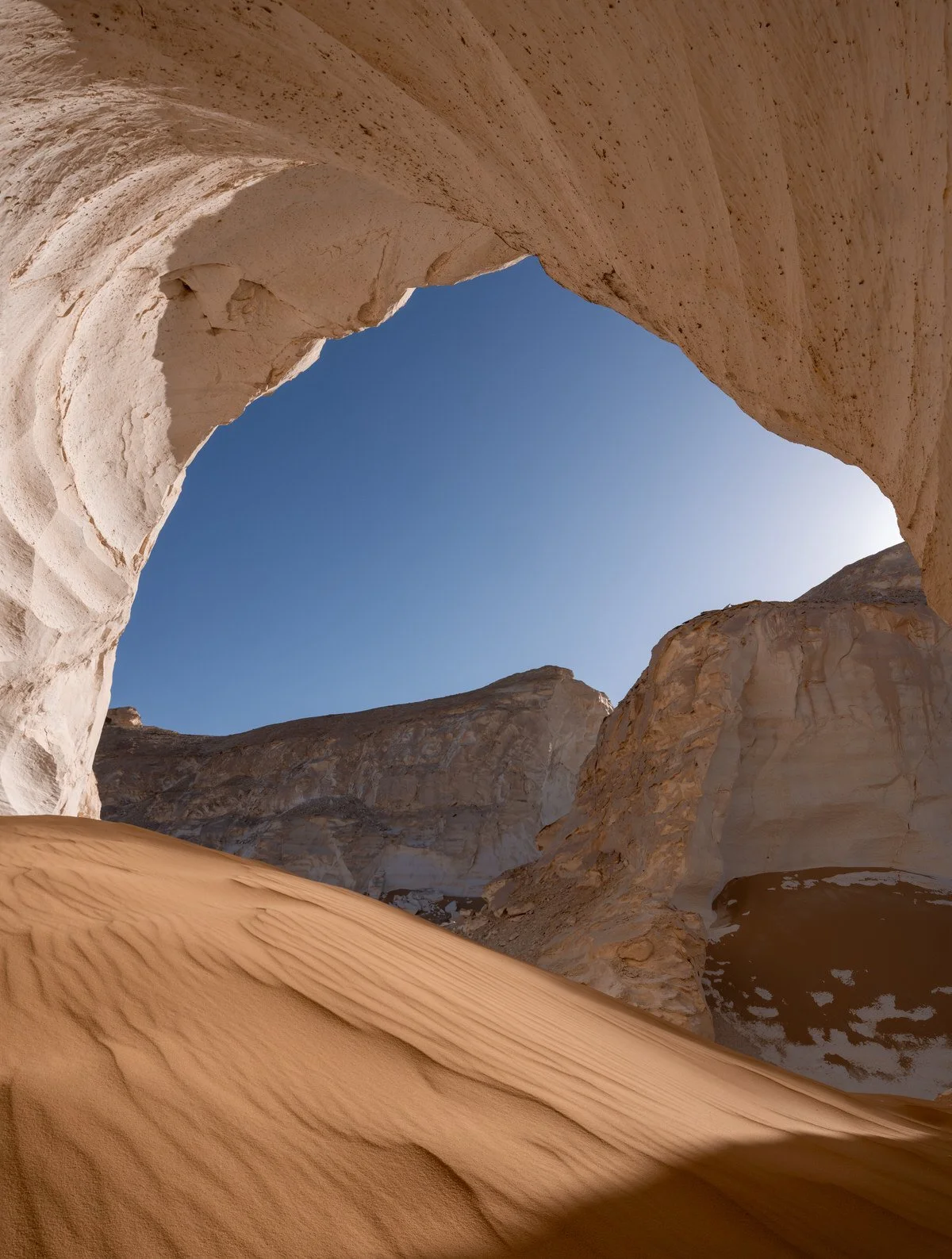
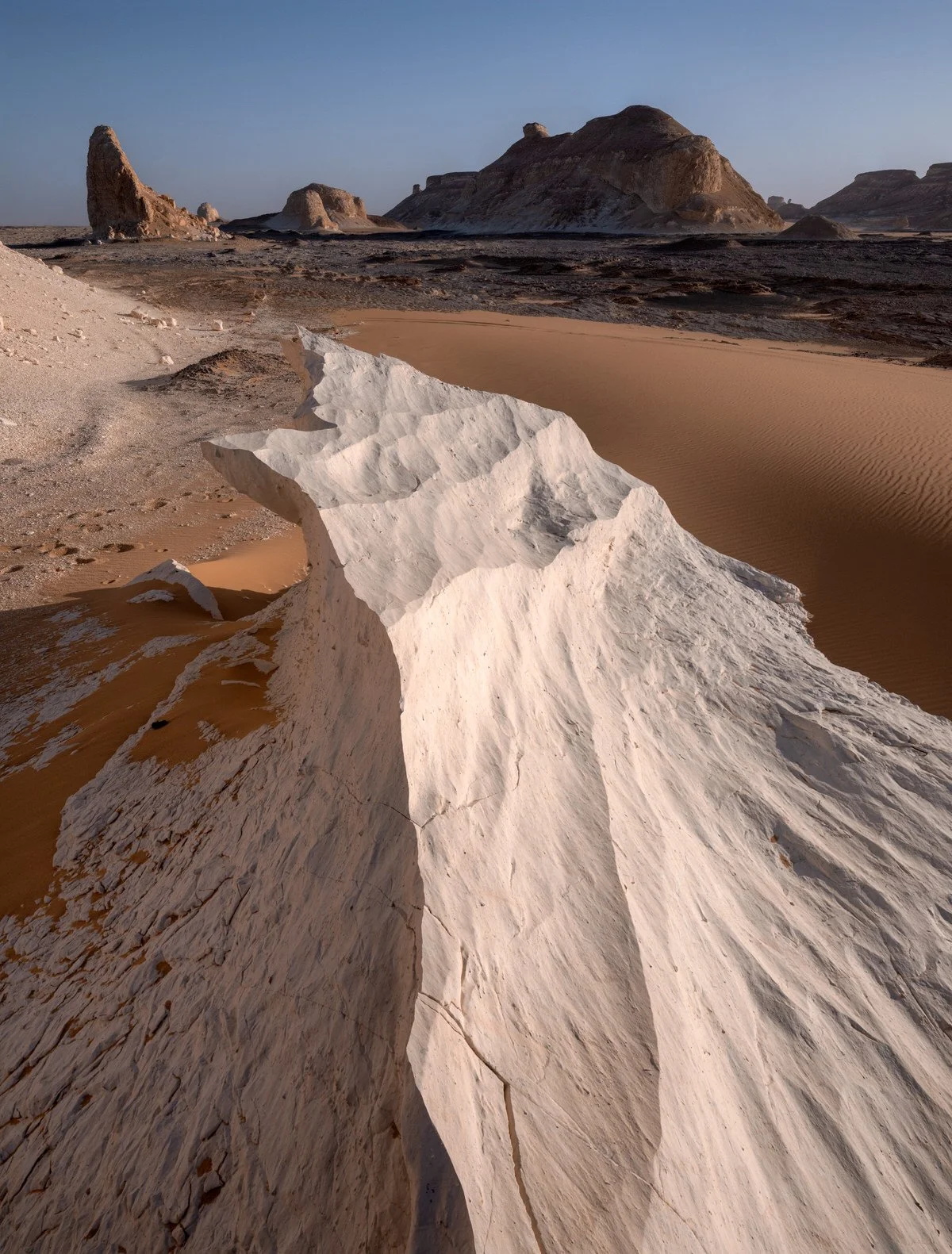
Final thoughts
This wasn't my first time in the White Desert, and it won't be my last. I've been here several times, and every visit I'm fascinated again by this geological site. The light, the wind and my own eye are never quite the same, so I find new compositions each time, and it keeps inspiring me.
Six days of dust, cold nights and old-school driving made this feel like a real expedition. Ahmad's knowledge, the Land Cruiser's reliability and the otherworldly shapes made it unforgettable. The White Desert rewards slowing down: arrive before sunset, stay through sunrise, and let the light do the work. Whether you're holding a camera or just a cup of Bedouin tea, it's a place that stays with you. Take your time, and keep your lens low.